















 |
Author: Christopher J. E. Johnson Published: Janurary, 2010 Updated: Nov 16, 2020 |
 |
 |
 |
Surprisingly, when I've had discussions with people about this topic, I've had a few of them yell at me in anger when I've told them that the cure for cancer has been known for a very long time. This subject matter can be extremely sensitive for some people, and it's because people often let them emotions get in the way of reasonable judgment, so I ask that the reader take a deep breath, relax, and take a logical approach to this issue.
I want the reader to know I'm not selling you anything. I'm not recommending any products, nor do I make any money from writing this. I'm simply offering information on what cancer is, how the cure works, and why the cure has been supressed by the media and our government.
The most common question I've received is: "Why haven't I heard of this?" If you have never researched what you will see in this article, that's probably the question you're asking in you head. If you're anything like me, I had always grown up thinking the cure for cancer was yet to be discovered, and the person who finds the cure will be famous and wealthy, but I did not realize how wrong and naive I was because the truth is that those who have discovered this cure have lost almost everything trying to get it to people.
My heart aches when I hear that someone has cancer, and though I want to help, I am general outcasted by others for talking about this issue, and because of that, I've almost stopped talking about it. I can't make people listen to me. I hope that by writing this article, those with a passion to find truth and knowledge can be saved from the horrible pains awaiting those who currently believe the only "cure" is in deadly radiation "therapies."
I'll warn you ahead of time that 95% of what you're going to read in this article will be exactly opposite of what you'll hear in the mainstream media, but keep in mind that I have full references to the material, and I encourage you to go look them up for yourself to verify what I'm writing. In order to understand this, most people have to be unbrainwashed from what they've been told by television shows and news broadcasts, and so I ask that you read this with a clear head, opening yourself to hear knowledge you may not be used to, so that hopefully, we can bring some suffering people back to good health.
Beloved, I wish above all things that thou mayest prosper and be in health, even as thy soul prospereth.
-3 John 1:2
.
If someone were to ask you how to fix their car, but you didn't know anything about the problem with the car, there's not much you can do to help them. So before we can begin to understand the cure for cancer, we first need to understand what cancer is and how it works.
chronic: continuing for a long time; recurring frequently
noncommunicable: unable to be trasmitted by direct contact
(See 'chronic' & 'noncommunicable', Random House Dictionary, 2015, [www.dictionary.com]; See also Collins English Dictionary, 10th Edition, William Collins Sons & Co, 2009)
For example, a common cold goes away after a few days, so it cannot be labeled as a chronic illness, but it can be passed to other people through contact, so it is a communicable disease. Illnesses like the flu, or even viruses like HIV or STD, cannot be compared with cancer because they don't match both definitions.
Throughout the history of this world, in all records of the diseases of mankind, there was never a "cure" invented to stop chronic, noncommunicable diseases, but yet, solutions have been found for them that have made them almost non-existant today. One of the most famous examples of a "cured" chronic, noncommunicable disease is scurvy.
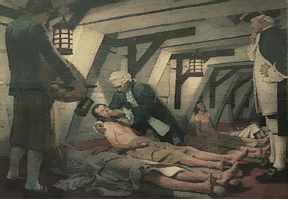 |
Scurvy was like the cancer of the 18th century, a disease that was killing millions and no one could find a cure. More specifically, the British navy was losing huge numbers of sailors to this epidemic. In 1753, James Lind published a book explaining scurvy's cure was actually linked to a lack of citrus fruit in the diet of those who suffered from scurvy. (See James Lind, A Treatise on the Scurvy in Three Parts, Kincaid, 1753, original in Austrian National Library) |
"Lind's study is cited as the first example of a scientifically controlled clinical experiment. His remedy was based on experiments made at sea on twelve sailors who had developed scurvy. Lind tested various supposed remedies by dividing the twelve sailors into six groups of two each...The most sudden and visible improvement occurred in the two who were fed oranges and lemons ; one was fit for duty after just six days."
-Lawrence K. Altman, Who Goes First?: The Story of Self-Experimentation in Medicine, University of Californica Press, 1987, p. 396, ISBN: 9780520212817
The typical diet of the British sailor consisted of a lot of salty red meats, which lacks certain vitamin content that people normally require, and almost 200 years later, it was discovered that it was a lack of Vitamin C that was killing British citizens. Although many authors claim that Lind was the first to discover this "cure," it was actually discovered many times before and after his book was published.
(See Bradley S Buckler MD, Anjali Parish MD, "Scurvy" EMedicine; See also Jonathan Lamb, "Captain Cook and the Scourge of Scurvy," BBC British History, Nov 11, 2009 [www.bbc.co.uk])
The following chart shows a list of chronic, noncommunicable diseases along side the natural foods (and vitamins within those) that remedy those illnesses:

Please notice in the above chart that the "cure" for these illnesses is not found in a chemical cocktail transformed into a miracle pill. The remedy for these illnesses is eating food that has vitamin content the body is lacking, and this is often referred to as "nutritional therapy."
| Mainstream television often preaches a message of "chemical therapy," which is why (assuming you watch television, which I would not recommend) there are so many commercials for new "ask-your-doctor" pharmaceutical drugs. It is important to note that naturally grown substances (like vitamin C) cannot be patented, and therefore, a monopoly cannot be created on it. They are advertising the process by which nutritional therapy works (i.e. lack of vitamins causes illness), but replacing the nutrition with their patented chemical drugs (i.e. lack of our drug causes your illness), so they can turn a profit. | 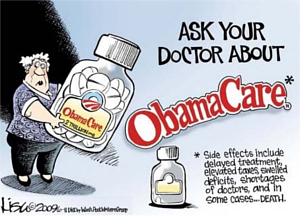 |
Let's imagine you took your car into a mechanic to have it repaired because it was making a very loud clunking noise that was really concerning, so you leave it there overnight, and when you come back to pick it up the next morning and ask the mechanic what he did to fix the problem, he tells you he covered the lining under the hood of your car with insallation and styrofoam so it will muffle the sound and you won't hear the clunking noise anymore. Would you pay the bill? Of course you would refuse to pay the bill because he did not fix the problem, he simply masked the symptom.

 |
Just as absurd as a mechanic trying to mask the symptom instead of fixing the problem, we also act in an absurd manner because most Americans are so brainwashed into pharmaceuticals, our medicine cabinets are filled with chemicals that mask the symptoms instead of fixing the problem. When you get a headache, the headache is not the source of the problem; it's a symptom that's telling you about a problem, no different than the "CHECK ENGINE" light on your car, so when you take an aspirin, you are effectively unplugging the light. |
Headaches, skin rashes, dizziness, soreness of joints -- all of these are symptons that indicate there is a problem in your body, but we tend to mask the symptoms, instead of fixing the problem indicated. For example, the tumor people get from cancer is often called the problem, but the tumor is simply the symptom of the underlying problem, so instead of fixing the problem, surgeons cut out the symptom and patients often falsely believe they've addressed the cancer.
| There was a man in a church building whose son had warts on his hands, and after trying ointments and creams, they would not go away, so he decided to take his son to have a doctor, and pay an expensive cost to freeze and remove the warts. Another Christian man in his church told him not to waste his time and money, and just go pick up some zinc tablets from the store, because warts were a sign of zinc deficiency. Within a few weeks of taking zinc, his son's hand warts disappeared. | 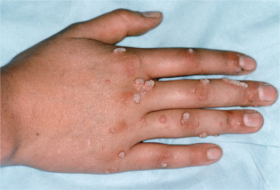 |
"Reduced zinc levels may be associated with persistent, recurring warts. Several studies have shown resolution of warts with oral zinc sulfate supplementation over one to two months."
-Michelle Villett, "How to Get Rid of Warts," Reader's Digest Best Health Magazine, December, 2011, retrieved Mar 17, 2015, [besthealthmag.ca/best-you/health/how-to-get-rid-of-warts#kYhtR2AdmOsCiBEy.97]
The hand warts are another example of a chronic, noncommunicable disease, and the warts are the symptom of the underlying problem. Tumors are also a symptom of the underlying problem, and so what vitamin deficiency are we lacking that is causing cancerous tumors?
Today, there are numerous "ghost stories" about where cancer comes from, as it seems to be a big mystery to doctors and our government institutions, and most of their websites will claim that it might lurk somewhere in your genetic code that is unseen by modern science. It's interesting that this is EXACTLY the same attitude and approach doctors and government officials took with scurvy in the 18th century, claiming that it was a mysterious illness that lurked the hulls of ships. Since the ACS tells us that almost 1 in 3 Americans get cancer, it would be best for us to quit relying on the ghost stories of the failing pharmaceutical industry, humble ourselves away from the false idea that "we're the greatest nation in the world," and start looking at the source of the problem.
(For statistics, see Cancer Statistics, 2009, American Cancer Society, CA Cancer J Clin 2009; 59:225-249 doi: 10.3322/caac.20006)
Trust in the LORD with all thine heart; and lean not unto thine own understanding. In all thy ways acknowledge him, and he shall direct thy paths. Be not wise in thine own eyes: fear the LORD, and depart from evil. It shall be health to thy navel, and marrow to thy bones.
-Proverbs 3:5-8
.
And God said, Behold, I have given you every herb bearing seed, which is upon the face of all the earth, and every tree, in the which is the fruit of a tree yielding seed; to you it shall be for meat.
-Genesis 1:29
"True, fruits and vegtables also don't come with any warning label. The difference is that humans have had thousands of years of experience with fruits and vegetables--we know that apples are safe butdon't eat the apple seeds . We may not know that apple seeds are full of a chemical called amygdalin that is converted by our gut enzymes into cyanide--we just know from our ancestors that it's a bad idea to eat them."
-Neal Adams, Healthy Vision: Prevent and Reverse Eye Disease though Better Nutrition, Rowman & Littlefield, 2014, p. 27, ISBN: 9781493016280; Adams is a surgeon who has appeared on news broadcasts around the world.
 |
The Bible tells us to eat the seeds, but this author tells us not to, so we have a conflict. Someone is wrong. Even though the author did not back up this claim with any sources where this information was proven, those who are repsecters of persons (i.e. they trust the word of a PhD no matter what he/she says) may refuse to read any farther down the page because they trust in the words of men with degrees over the Word of God, but the Bible tells us that respecting persons is sin. (Read "Why Are Christians Respecting Persons?" here at creationliberty.com for more details.) |
But if ye have respect to persons, ye commit sin, and are convinced of the law as transgressors.
-James 2:9
The above author will do what most doctors do when they want a medical answer, they go straight to the American Medical Association (AMA). However the AMA has had a history of rejecting good medicines, and adopting bad medicines, like pharmaceuticals and radition treatments, that harm people. (We'll discuss more on that later.)
| Over 100 years ago, a very important vitamin was found by Dr. Ernst T. Krebs, a graduate pharmacist and accredited physician in Nevada, to be concentrated in the seeds of fruits and vegetables. Before this discovery, Krebs was the first modern scientist to use an antibiotic in medicine by studying the Washoe Indian herbal remedies, and after finding a more efficient way to extract the healing properties of the plants, he created what is known today as "leptonin," which helped saved almost a hundred of his patients suffering from bacterial disease. However, the Journal of the American Medical Association ignored his findings, labeling him a "quack," and the cure was not rediscovered until almost 30 years later. | 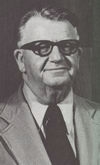 |
Mainstream authors and medical institutions condemn Krebs' research as if he was just some snake-oil salesman. However, what they avoid telling the public is that in 1953, almost 40 years later, scientists at the University of Utah School of Medicine published "Studies on Antibiotic Extract of Leptotaenia," and admitted Dr. Krebs's findings were accurate, proving his research was true.
(See Journal of American Medical Association, Nov 1920, Vol. 75, No. 19, p. 1299; See also H. J. Carlson & H. G. Douglas, and H. D. Bissell, Journal of Bacteriology, May 1948, Vol. 55, p. 607-614; See also Antibiotics and Chemotherapy (3 (4) 393), 1953)
For example, biased critiques like James H. Young, who wrote the book American Health Quackery, in which he attacks Krebs, never bother to mention that Dr. Kreb's findings were later verified true by the other scientists. Young tries to make it seem like Krebs was just in it to make money.
(See James H. Young, American Health Quackery: Collected Essays of James Harvey Young, Princeton University Press, 2014, p. 205, ISBN: 9781400862917)
The facts are these: Ernst Krebs was studying natural remedies for bacterial disease (along with studying the work of Professor John Beard, who linked cancer to enzymes), and during his research, Krebs picked up an interest in studying cancer. While investigating the culture of the Washoe Indians, as well as other native tribes, Krebs noticed that they did not have the same cancerous diseases that white men had, so his prior experience led Krebs to look for a cure in natural foods and herbs which they consumed.
(Beard's work on enzymes was generally ignored in favor of Madam Curie's radiation which came about at the same time; See Jeffery Dach, MD, Biodentical Hormones 101, iUniverse, 2011, p. 496, ISBN: 9781462036547
This research was later completed by Krebs's son, Ernst T. Krebs Jr., who studied in anatomy and medicine at Hahnemann Medical College for three years, received his bachelor's degree in bacteriology from the University of Illinois, and did his graduate work at the University of Mississippi and the University of California. (I include this information so readers do not walk away thinking these men were just random quacks.) Krebs Jr. picked up his father's (and Professor Beard's) research and made many discoveries, the most important of which was vitamin B17 (amygdaline), which is found most commonly in the seeds of fruits and vegetables, and the discovery of B17 led him to develop a concentrated pill form he named "laetrile."
Of course, there are many people who believe an old wives tale that they heard growing up, namely, that you should not eat the seeds of fruits. For example, I was raised on an apple orchard, and I was taught not to eat the apple seeds because they were poisonous, but again, this is an urban legend that was spread around by the media, even though it's not true.
 |
It is true that seeds contain cyanide, which is normally deadly to the human body. The average person then believes that seeds should not be consumed, but chlorine is dangerous to the human body, so does that mean we will die if we consume table salt (i.e. sodium chloride)? Obviously not. For example, oxygen will quickly strengthen a fire and increase the heat, and hydrogen will make it explode. If your house is on fire, would it not be foolish to spray hydrogen and oxygen on it? However, every fireman in the world sprays hydrogen and oxygen on a fire, combining them together into a substance called H2O, which we know more commonly as water. |
If people stopped consuming things based on individual chemicals, then no one in the world would eat anything. Chemistry involves combining substances together to create something beneficial for the task at hand.
|
If you came to me hungry, and I offered you the following things to eat, you wouldn't be interested: *Butter *Baking Soda *Flour |
 |
B17 is two units of glucose (sugar), one of benzaldehyde, and one of cyanide. Many people know cyanide and benzaldehyde can be deadly if consumed individually, but in the chemical combination found in seeds, the components are inert and have no effect on the body. This means that, unless triggered to unlock, the tiny amount of cyanide and benzaldehyde will remain in the chemical compound, as if locked away in a chest. There is only one enzyme that has the key which can unlock the cyanide and benzaldehyde, and that is called beta-glucosidase.


Most readers may be concerned at this point that a cancerous patient eating seeds might have the rest of their body harmed by chemicals like benzaldehyde, but the benzaldehyde oxidizes when it comes in contact with the oxygen in a normal cell in your body, and is converted to benzoic acid, which many Americans consume on a regular basis because it's found naturally occuring in many plants and used as a preservative in products like dried fruit, toothpaste, and dog food (just to name a few examples). Benzoic acid even has antiseptic properties, which means it won't cause your healthy cells any damage. However, cancer cells are devoid of oxygen (which is what causes them to ferment and become dangerous to your body), so once benzaldehyde comes into contact with the cancer cell, it works to destroy the cell causing problems.
(For more details on benozic acid and antisecptics, see R.H. Goshorn & P.A. Tetrault, "Antiseptic and Bactericidal Action of Benzoic Acid and Inorganic Salts," Purdue University, p. 646, retrieved Mar 18, 2015, [pubs.acs.org/doi/abs/10.1021/ie50342a009])
As for the cyanide, all healthy cells in your body have a natural protective enzyme called rhodanese, which will break down tiny traces of cyanide so it becomes harmless to your body, but cancer cells are void of rhodanese, which means the cyanide can work to kill it off. After the cyanide kills off the cancer cell, it's then converted into a substance called cyanocobalamin, which becomes part of the B12 molecule, and technically becomes B12 itself, which is healthy for streamlining your digestion.
(See Dr. Ross Pelton & Dr. Lee Overholser, Alternatives in Cancer Therapy, 1994, p. 155, ISBN: 0-671-79623-2; See also G. Edward Griffin, World Without Cancer, 18th Edition, March 2006, p. 86-91, ISBN: 0-912986-19-0)
If someone were to drink benzaldehyde or cyanide, they would most likely die, but when these chemicals are in their bonded state in the seeds, both of these substances are neutralized by your body's natural chemical defenses, and become not only harmless, but nutritious. It is sad that most people will never have this knowledge, or refuse to acknowledge it, and later in this article, we will discuss why so many reject it, sometimes quite viciously.
Though B17 is found in many grasses and herbs, scientists have found it is most highly concentrated in the seeds of fruits and vegetables, which backs up what the Lord God told Adam and Eve at the beginning that they were to eat the seeds. Next, let's take a look at the natural world around us to gain more insight into B17.
.
"Another consideration to which I have previously called attention is, that these abnormalities very rarely affect organisms living in a state of nature. It is almost exclusively among domesticated varieties, among those that have been kept long in confinement, or that have been otherwise abnormally circumstanced, that tumours are met with; thus,in savages and wild animals, tumours very rarely occur ."
-William R. Williams, The Natural History of Cancer: With Special Reference to Its Causation and Prevention, William Wood and Company, 1908, p. 87
When the above author refers to "savages," he's referring to those he believes are lesser men in terms of his religion of Evolutionism. However, these are men and animals that live off the natural land, and they almost never get cases of cancer, even though almost 1 in 3 Americans today, with all their modern science and conveniences, get cancer.
(Read "Evolutionism: Another New-Age Religion" here at creationliberty.com for more details.)
There are a number of sources that will say that animals get cancer all the time, but this is when they are domesticated, either in homes or zoos.
"Recent observations as to the relative frequency of malignant tumours in the latter, show that these maladies are not so rare as was formerly believed: thus, Veterinary-Inspector Trotter found that of 47,362cattle , slaughtered at Glasgow in 1903, 131 had some form of malignant tumor, or2.8 per 1,000 , the corresponding ratio for English humanity being about 60 per 1,000.All the indications at the present available point to the great rarity of cancer in wild animals ,"
-William R. Williams, The Natural History of Cancer: With Special Reference to Its Causation and Prevention, William Wood and Company, 1908, p. 88
The 60 per 1,000 human ratio has obviously increased dramatically over the last 100 years, but the animal ratio stays about the same. The only increase in animal cancer is when they adopt the typical diet of "advanced" civilizations that consist of a high-sugar, high-fat diet of processed foods.
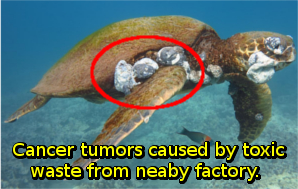 |
I've had skeptics email me concerning wild animals having cancer; for example, I was sent a news report of an Australian turtle population that got cancer, but what they quickly overlooked is a new factory that had been built in the area, and it was seeping large amounts of toxins into the water, which was causing an epidemic of cancer and death in the local wildlife. However, when researching in an area of animal wildlife that has no contact with societies of mankind, cancer is almost non-existent. |
The following author admits the difficulties in doing complete experimentation on a natural population of animals, and points out that most experimentation gets done on domesticated animals, which have been influenced by mankind's diet:
"Despite themany difficulties involved in the study of the zoological distribution of cancer , much interesting material has been collected, and certain lines of inquiry have been very definitely indicated. Particularly does this apply, in the latter regard, to certain of the mammalia commonly classed as domesticated animals, as, for instance,horses, cows, sheep, dogs, cats, pigs ; and also to certain others not usually so considered, yet which have sointimate a connection with domestic life as to come within its category, such astame rats, mice, rabbits, and guinea-pigs ."
-William S. Bainbridge, The Cancer Problem, Macmillan, 1914, p. 46
Many of us are familiar with the typical nature shows, like National Geographic, which show lions killing their prey and ripping the meat off their bones to eat all the meat, but those who have actually lived among animals in the wild will tell a different story. Lions certainly do rip open their kills, but they most often do not go for the meat first (and sometimes not at all), they go for the nutrient-rich organs, like the liver and the heart.
Joe Hutto lived among, and traveled with, a pack of mule deer for seven years, and came back to write a book on his findings:"Unlike the kills of the coyote or the wolf, lion kills appear to be relatively efficient, and death comes swiftly most of the time, but the unfortunate fact is that in most instances, |
 |
There has not yet been a recorded case of these animals, while living apart from mankind's domesticated diets, killed in the wild and the autopsy showing any cancerous tumors. Again, it is almost always the case that those animals that have been found with cancer tumors have had connection with mankind's society. There are many natural grasses that contain high-vitamin concentrations of B17, and it is quite common for ferocious animals like lions and tigers to tear through the meat of those grazing animals to get to the nutrients they need from the healthy organs that contain high-vitamin content.
(See EcoTravel Tourist Information [www.ecotravel.co.za], "African Lion Hunting Habits in South Africa," 2005; See also Missouri Departement of Conservation [mdc.mo.gov], "Wildlife Sightings - Mountain Lions," 2010)
It is also common for people to think that lions only eat meat, and again, that's due much to television influence. During the early days of movie production, there was a lion named "Little Tyke" that was used in many sets, but absolutely refused to eat, or have anything to do with, meat in her diet.
(See Georges H. Westbeau, Little Tyke: The True Story of a Gentle Vegetarian Lioness, Theosophical Publishing House, 1986, ISBN: 9780835606059)
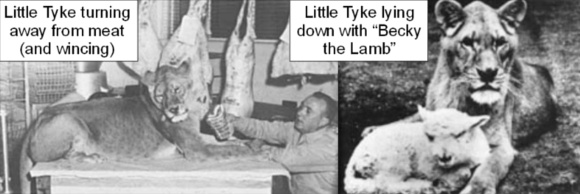
Little Tyke would only eat vegetables, and at one point, there was a $1,000 reward offered for anyone who could trick Little Tyke into eating meat, but no one could claim the money. Many tricks were attempted, even one person putting a few drops of blood into her milk, but she refused to drink it. The point of this is to demonstrate that supposedly "carnivorous" animals do eat plants, just like our dog will often go out and eat certain types of grasses to get special nutrients he needs, among which is B17, that is found in certain types of grasses. (We will learn more information about that in the next section.)
Domesticated pets get cancer quite frequently, and I have received letters from pet owners asking about whether B17 can help their beloved animals. The short answer is: Yes, it can. Very rarely do pet owners hear about B17 and seeds, but those who do, and follow through, have reported amazing results.
A website about B17 and seeds accepts many emailed testimonies, like this man's dog for example [edited for spelling]:
"A gentleman named Al from around my block, who has a German Shepard named Duke, told me in the local deli that his dog has cancerous tumors all over. Big tumors. He said he spent $7000 for cat scans and other diagnostic procedures which all concluded 100% definite cancer. I ran him to my mother's house and gave him about a 1/4 bag of her supply (they are back ordered all over the US right now and I need MY seeds). Told him to give them to his dog even if it throws up.Today, two weeks later as he was walking his dog, he came to my house. He made his Duke turn to where the biggest of the tumors had been. Nothing. A tiny lump compared to half a soft ball two weeks earlier... He said the first day or two that Duke regurgitated them. He fed them to him again and again until Duke accepted them."
-Apricots From God, "Testimonies," June 29, 2011, retrieved Mar 19, 2015, [apricotsfromgod.info/testimony.htm]; This website was seized by the FBI in 2019 because the owner, Jason Vale, has been persecuted by the AMA and CDC for selling apricot seeds in relation to healing cancer, but older screenshots of the site can be seen here: [https://web.archive.org/web/20190127050035/http://www.apricotsfromgod.info/testimonials/]
Here's another one for a horse [edited for spelling]:
"Susan's horse, Jack, was diagnosed with squamous cell carcinoma in his left nostril a few months ago. She emailed asking if the seeds could help. I told her absolutely and also about the famous Hoxey Cancer therapy discovered when Mr. Hoxey followed his cancer ridden horse into the woods to write down the herbs the horse was eating as the tumors shrunk. She started the seeds and some herbs and now, three months later has e-mailed me the following note:
Just emailing with an update on my horse's success.His vet came out for a 3 month check-up on Friday and his carcinoma has shrunk !!! The outside swelling has visibly shrunk and the inside lesion is no longer ulcerated and only very tiny — and looking very healthy!! Unfortunately, because of the location of the carcinoma (very high up on the inside of his left nostril), it is not really possible for me to check its progress without her special instruments but she will come again in a few months to check. She wasn't familiar with the herbal remedy or the apricot seeds I'm treating him with but was amazed and really happy with the way things are looking. He's currently taking six seeds in the morning and six seeds in the evening."
-Apricots From God, "Testimonies," June 29, 2011, retrieved Mar 19, 2015, [apricotsfromgod.info/testimony.htm]; This website was seized by the FBI in 2019 because the owner, Jason Vale, has been persecuted by the AMA and CDC for selling apricot seeds in relation to healing cancer, but older screenshots of the site can be seen here: [https://web.archive.org/web/20190127050035/http://www.apricotsfromgod.info/testimonials/]
Though many veterinarians ignore these results, some have taken it upon themselves to test it on animals with cancerous tumors in their own clinics. Dr. George Browne Jr., head of the Eureka Veterinary Hospital in Eureka, California, published his experiment on a five-year-old male Pekingese dog with thyroid carcinoma:
 |
"The twice weekly regimen was continued for one month, during which time the growth regressed to a size comparable to that palpated during the original examination. Intravenous injections were discontinued and a daily maintenance dosage of 100 mg. [milligrams] of amygdalin [B17/laetrile] per orum [via the mouth] was established. This dosage has been continued for seven months. |
Although many people are surprised at how effective the seeds are, it's a simple matter of vitamin defiency. No matter which vitamin it is, whether man or animal, if one is devoid of a vitamin, it will cause serious problems, and taking the needed vitamin fixes those problems.
.
An similar case of this phenomenon can be found in the Hunza tribe, a people who live secluded in a mountain range that borders China, India, and Afghanistan. The valley is so difficult to reach, it would take some extreme mountain climbing or a helicopter in order to reach it.
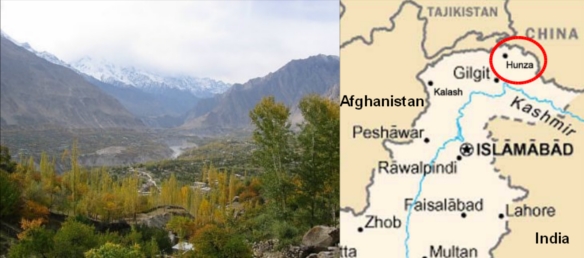
The study of the Hunzakuts have shown that many of their elderly live over 100 years old (up to 120 in some cases). Some men live up to 110 years old have had newborn children with their wives, even at an older age, and many have perfect 20/20 vision. The average life expectancy in the US, with all the advanced medical technology and saftey regulations, is 78, and it is slowly dropping in recent years, but the average age of death in Hunza, without all that technology, is 85.
(Photo by Dr. J. Milton Hoffman; Taken from World Without Cancer, Second Edition, 1997, ISBN: 0-912986-19-0)
Americans typically suffer many painful conditions before dying (and are usually dead a few years before their heart stops beating), but the Hunza elderly often die peacefully in their sleep. Though there are many interesting facts about the Hunzas, the one to note is there are no reported cases of cancer in their society.
(For details on ages, see Los Angeles Times, Interview with Prince Mohammed Ameen Khan, May 7, 1973, Part I-A; For life expectancy, see "Life Expectancy at Birth," The World Factbook, Central Intelligence Agency [www.cia.gov])
A number of scientists and medical doctors have reported on this over the past 100 years:
"Birth records of the Hunza are more difficult to obtain... but UNESCO data indicate thatthe Hunza are the only people in the entire world who are completely free of cancer ."
-Lewis R. Aiken, Aging: An Introduction to Gerontology, SAGE, 1995, p. 15, ISBN: 9780803954458
"The Hunza has no known incidence of cancer. They have... an abundant crop of apricots. These they dry in the sun and use very largely in their food."
-Dr. Robert McCarrison, Journal of The American Medical Association, Jan 7, 1922, Vol. 78, p. 1-8
Apricots are the primary source of wealth in the Hunza valley. If you
Again, the apricot seed has B17, just like most fruits and vegetables, and the amazing thing about the Hunza case is that the seed of the apricot has been found to contain the highest concentrated source of B17 among any plant in the world:
"The apricot seed is the richest source of Vitamin B17 ."
-Don Orwell, Superfoods Today Chocolate Sugar Detox, Superfoods Today, Google Ebooks, 2015
It is incredibly difficult to find any medical journals that will even mention B17 because they do not consider it a vitamin, or at least, not a vitamin that has any effect on the body. Yet, a thorough study of the Hunza tribe proves that the pride of "modern medicine" is getting in the way of the truth.
(Read "The Biblical Understanding of Pride" here at creationliberty.com for more details.)
"B17 is found in natural foods such as grasses, maize, sorghum, millet, cassava, linseed, seeds, and kernels.The most common source of B17 is the apricot kernel ."
-Richard DeAndrea, Breakthrough Cures - Revolutionary Answers to the Deadliest Diseases, Booksmango, p. 86, ISBN: 9786162220609
People are free to ignore the connection between the cancer-free society and B17 if they want, but the facts still remain. The Hunza have always used the apricot tree as a measure of a man's wealth:
"Although presently accepted science is unable to explain why these people should have been free of cancer, it is interesting to note that the traditional Hunza diet contains over two-hundred times more nitriloside [foods that contain B17] than the average American diet. In fact, in that land where there was no such thing as money,a man's wealth was measured by the number of apricot trees he owned. And the most prized of all foods was considered to be the apricot seed ."
-G. Edward Griffin, World Without Cancer: The Story of Vitamin B17, Aware Journalism, 1997, p. 63, ISBN: 9780912986197
The Hunza take the apricot seed even further, using it for all sorts of health and wellness products they make themselves. Taking a journey to the Hunza valley, this author reported on his time there:
"My curiosity aroused, I asked, 'What do you do with the seeds you do not eat? '
The guide informed me that many are stored, but most of them are ground very fine and then squeezed under pressure to produce a very rich oil. 'This oil,' my guide claimed, 'looks much like olive oil. Sometimes we swallow a spoonful of it when we need it. On special days, we deep-fry our chappatis [bread] in it. On festival nights, our women use the oil to shine their hair. It makes a good rubbing compound for body bruises .'"
-Allen E. Banik & Renee Taylor, Hunza Land, 1960, Chapter 4, "Hunza Farming and Food," p. 123-124
(Photo by Dr. J. Milton Hoffman; Taken from World Without Cancer, Second Edition, 1997, ISBN: 0-912986-19-0)
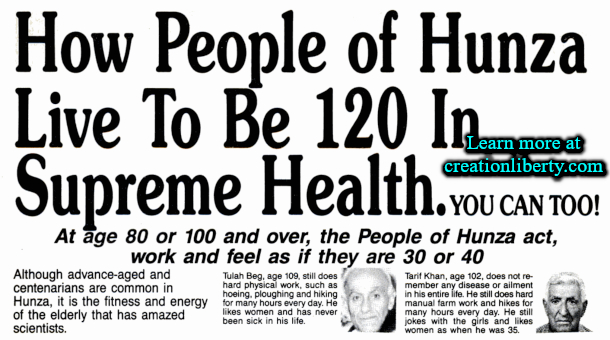
Among the few people who have been willing to try changing their eating habits to reflect that of the Hunza tribe (which means cutting out fats, salts, sugars, preservatives, and processed foods, and turning to organic, natural food, with a healthy consumption of apricots and their seeds) have cured them of cancer and greatly improved their overall health:
"Emilia Chovan Kephart has beaten her cancer with natural live foods; a diet similar to recommended Hunza diet ... Eight years has passed from the time she contracted the deadly cancer and today she is healthier, more energetic, more vital and enjoys life as never before."
-Vegetarian Times, "How People of Hunza Live To Be 120 In Supreme Health," No. 92, April, 1985, p. 3, ISSN: 0164-8497
"Doctor Serinov Ninski...cured his heart disease and arteries problem without surgery and by natural live foods, a diet similar to recommended Hunza diet ."
-Vegetarian Times, "How People of Hunza Live To Be 120 In Supreme Health," No. 92, April, 1985, p. 3, ISSN: 0164-8497
This correlates with the book of Daniel, when he chose a healthier, natural diet that was better than what the king was feeding the other servants:
And the king appointed them a daily provision of the king's meat, and of the wine which he drank... But Daniel purposed in his heart that he would not defile himself with the portion of the king's meat, nor with the wine which he drank... Prove thy servants, I beseech thee, ten days; and let them give us pulse to eat, and water to drink. Then let our countenances be looked upon before thee, and the countenance of the children that eat of the portion of the king's meat: and as thou seest, deal with thy servants... And at the end of ten days their countenances appeared fairer and fatter [healthier] in flesh than all the children which did eat the portion of the king's meat.
-Daniel 1:5-15
[Pulse is plants and their seeds, beans, peas, etc. The word 'fatter' used to mean "healthy", but in modern times, the word has changed to mean unhealthy.]
For the drunkard and the glutton shall come to poverty: and drowsiness shall clothe a man with rags.
-Proverbs 23:21
.
(Read "Psychology: Hoodwinked by the Devil" here at creationliberty.com for more details.)
 |
First, we'll take a look at Mr. Pillsbury (yes, the name of that brand of pie crust you may have purchased), and a man by the name of Fred Gates, who invented a brilliant and deceptive "philanthropic" campaign method you may have commonly seen. In the late 19th century, Gates had Mr. Pillsbury give $50,000 to the Owatonna Baptist Academy, on the condition that the baptist community raise an equal amount, but even though half of the resulting $100,000 dollars in donated funds came from the efforts of the community, the entire project was personally credited to Mr. Pillsbury, even though he did almost nothing, and it boosted his popularity and sales by becoming "benevolent" in the public eye. |
The "charity" of corporate businesses always seeks a return on its investments. After donating the money, the Baptists at a state convention in 1886 declared:
"[T]he thanks of the convention and of the Baptists of the State whom it represents are hereby gratefully returned to Mr. Pillsbury with the assurance thathis great and generous gift has further endeared him to us and has given to us a name that we and those who shall follow us will profoundly cherish...That Minnesota Academy be hereafter known and called Pillsbury Academy ."
-United States Bureau of Education, Circular of Information, U.S. Government Printing Office, 1902, p. 218
The king by judgment establisheth the land: but he that receiveth gifts overthroweth it.
-Proverbs 29:4
A wicked man taketh a gift out of the bosom to pervert the ways of judgment.
-Proverbs 17:23
"Fred Gates was a wonderful business man... His work for the American Baptist Education Society required him to travel extensively. Once, as he was going south, I asked him to look into an iron mill in which I had an interest. His report was a model of clarity! Then I asked him to make some investigations of other property in the west. I had been told this particular company was rolling in wealth. Mr. Gates' report showed I had been deceived.Now I realized I had met a commercial genius. I persuiaded Mr. Gates to become a man of business. He consented--if I would help him indulge his passion for accomplishing something for the good of mankind. Of course, I assented.That was the beginning of our association. "
-John D. Rockefeller, quoted by John K. Winkler, John D. Rockefeller: A Portrait in Oils, Cosimo Inc., 2007, p. 177, ISBN: 9781602069688
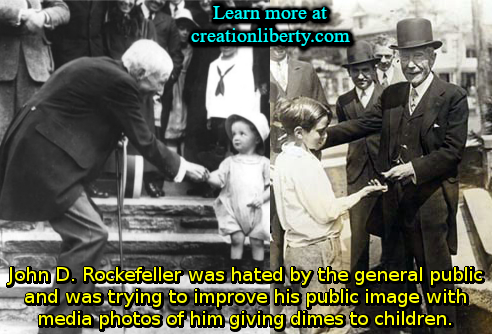
Some of you may be wondering what this has to do with cancer, but I ask that you bear with me; we're getting there. For emphasis, I want to recap the benefits of this "matching donations" tactic Gates brought to the Rockefeller cartel:
|
There is a way which seemeth right unto a man, but the end thereof are the ways of death.
-Proverbs 14:12
And through covetousness shall they with feigned words make merchandise of you: whose judgment now of a long time lingereth not, and their damnation slumbereth not.
-2 Peter 2:3
(See Matching Gifts, "Who We Serve," retrieved Aug 14, 2019, [hepdata.com/who-we-serve]; Other organizations include, but are not limited to, The American Heart Association, American Red Cross, and Habitat for Humanity.)
Before anyone starts calling me names and condemning me (which I have often received for speaking the truth on this matter), please keep in mind, there are many well-intentioned people that donate to the ACS, and a lot of volunteers that honestly think they are doing the right thing, but the men who rule over the organzation are corrupt to the core, and each one of those volunteers and donators are being deceived and used in a variety of ways. Some people will stop reading right here, because they react emotionally instead of reasonably, but for those of you want to know the truth, let's go back to to the beginning of the ACS.
The American Cancer Society was formed officially in 1913 at the Harvard Club in New York, and the original board of directors were made up of men like Alfred P. Sloan (General Motors), Monroe Rathbone (Standard Oil), and Charles D. Hilles (AT&T), just to name a few. This already raises red flags that this organization was formed by the leaders of major corporate cartels that have done many deceptive things for the love of money and power, and it's interesting to note that this information is not published on the ACS website; they keep it vague by saying:
"Established in 1913 bya small group of physicians and businessmen ,"
-American Cancer Society, "About Us," retrieved Mar 19, 2015, [cancer.org/aboutus/whoweare/governance/index]
Many people think that the American Cancer Society is a non-profit because they are 501(c)(3) incorporated, and on paper, they are, but what is generally not known is this:
"The American Medical Association has strong ties to pharaceutical companies, and -Zillah R. Eisenstein, Manmade Breast Cancers, Cornell University Press, 2001, p. 101, ISBN: 9780801487071; Eisenstein is a professor and Chair of Politics at Ithaca College in New York. |
 |
For example, there is a drug used in chemotherapy treatment called "5 fluorouracil" (5-FU), and the patent on it is partially owned by the ACS:
"Another popular breast cancer drug, and part of the chemo cocktail I was prescribed, is 5-fluorouracil or 5-FU.Hoffman-LaRoche held the patent for seventeen years with the American Cancer Soceity (who owned twenty-five per cent) says Moss. 'Perhaps by coincidence,' he adds, 'one of thefounders of the American Cancer Society, Elmer Bobst, is a former president of Hoffman-LaRoche . Bobst was one of the high-profile businessmen Mary Lasker brought onto the ACS board when she took charge of the Association in the 1940s."
-Sharon Batt, Patient No More: The Politics of Breast Cancer, Spinifex Press, 2003, p. 253-254, ISBN: 9781875559398
 |
We have the "coincidence" of the former president of Hoffman-LaRoche, who jointly owns the patent for a particular drug with the ACS, recommending the drug's use to medical facilities. This is like a high-school basketball coach having his son on the team, and "coincidentally" his son ends up on the starting line up every game, or like having a beauty pageant, and the mother of one of the contestants is also a judge. It's a "fox guarding the hen house" situation. |
"An officially approved 'standard of care' drug for treatment of cancer of the colon is based onthe use of a highly toxic chemical, 5-F-U, despite reports in prestigious medical journals that it doesn't work. It continues to be widely used, perhaps because the American Cancer Society owns 50% of 5-F-U ."
-Eustace Mullins, Murder by Injection: The Story of the Medical Conspiracy Against America, Aware Journalism, p. 164, ISBN: 9780880606943
The ACS owns many patents, or portions of them, and turns a profit from the use of products for which they have patents. This is almost never reported, and sadly, due to the emotional reaction at the word "cancer," most Americans do not bother looking into the fact that the ACS is profiting from the very chemicals it recommends for the treatment of cancer:
"Many donors to the ACS would be outraged to learn that the organization has a vested interest in the sale of drugs and a financial tie-in with the drug industry. "
-G. Edward Griffin, World Without Cancer, 18th Edition, March 2006, p. 258, ISBN 0-912986-19-0; For more details on the corporate corruption p. 211-226
Though that information may be shocking to some, it doesn't end there because Americans today are still unaware of Rockefeller's vile takeover of the American medical schools. In 1890, just a few years after Fred Gates was hired by Rockefeller, the Baptist University of Chicago received a $600,000 donation under the condition that they raise $400,000. (Rockefeller is given full credit for the entire million-dollar donation, of course.) Within a year after this donation, Rockefeller's chosen candidate, Dr. William Rainey Harper, was named president of the Baptist University of Chicago, and within two years, all anti-Rockefeller teaching staff were removed, and replaced with those who would follow John D. Rockefeller's ideals. After the school takeover, Rockefeller was praised by the staff, including one professor of economics, Dr. Gunton, who said that Rockefeller was "superior in creative genius to Shakespeare, Homer and Dante."
(See Matthew Josephson, The Robber Barrons, 1934, p. 324, ISBN: 0-15-676790-2)
Rockefeller had discovered how to buy influence over the training institutions of those who would be selling his pharmaceutical drugs. This three-step process was repeated in all the major medical schools around the country:
|
For more information on the major corporate cartels, and the conspiracies behind them in push for a one-world government controlled by an elite few, I recommend the following books:
|
"For more than a century, idealogical extremists at either end of the political spectrum have seized upon well-publicized incidents such as my encounter with Castro to attack the Rockefeller family for the inordinate influence they claim we wield over American political and economic institutions.Some even believe we are part of a secret cabal working against the best interests of the United States, characterizing my family and me as 'internationalists' and of conspiring with others around the world to build a more integrated global political and economic structure -- one world, if you will. If that's the charge, I stand guilty, and I am proud of it ."
-David Rockefeller, Memoirs, Random House Publishing Group, 2011, p. 405, ISBN: 9780307789389
Now that we have established a basis for the thinking behind pharmaceutical drugs, and corporate interests behind them, we can now go into more details about why the cure for cancer has been buried.
For the love of money is the root of all evil: which while some coveted after, they have erred from the faith, and pierced themselves through with many sorrows.
-1 Timothy 6:10
.
Pride goeth before destruction, and an haughty spirit before a fall.
-Proverbs 16:18
Thus saith the LORD; Cursed be the man that trusteth in man, and maketh flesh his arm, and whose heart departeth from the LORD... The heart is deceitful above all things, and desperately wicked: who can know it?
-Jeremiah 17:5-9
But evil men and seducers shall wax worse and worse, deceiving, and being deceived.
-2 Timothy 3:13
There are certain things that CANNOT be patented, and one of those is a naturally growing substance. For example, vitamins cannot be patented, and so vitamins like B17 are not able to be used by a corporation to turn exclusive profit. Thus, when looking for a particular product to cure cancer, corporate cartels are looking for something they can patent from a laboratory, not something naturally occurring, and I would ask readers to keep this in mind because it will be important later to fully understand what we are about to see.
After Ernst Krebs developed laetrile, which is a concentrated pill form of B17, he began to distribute it to his patients. People were being cured from the cancer, which was hurting the profits of corporate cartels, and so something had to be done to stop it, which brings us to McDonald and Garland.
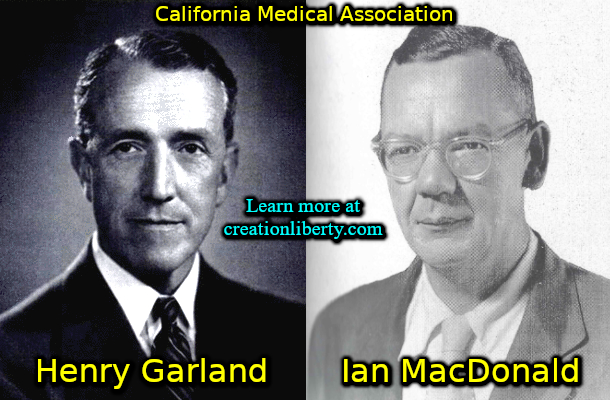
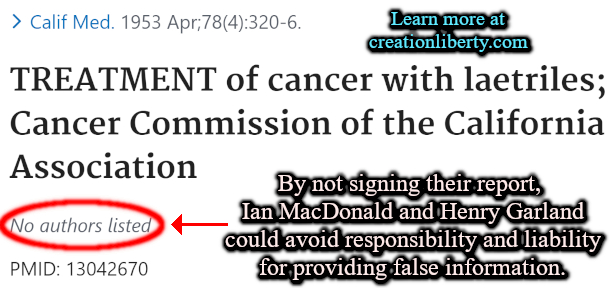
In 1953, only two men, Dr. E.M. McDonald [Left] (American Medical Association Committee Chairman) and Dr. Henry Garland [Right] (American Medical Association Committee Secretary), out of seven total in the AMA committee, published their suspiciously UNSIGNED report of a State of California experiment on laetrile. Keep in mind, these two AMA representatives did not personally do any experiments on, nor have any experience with, laetrile, they only reviewed documents from people that did.
(See "TREATMENT of cancer with laetriles; a report by the Cancer Commission of the California Medical Association", Calif Med, April, 1953; 78(4):320-6)
It's also interesting to note that Garland and McDonald are infamous today after reviewing testing on cigarettes connection to lung cancer, and coined two popular phrases back in the late 1950s: "A pack a day keeps lung cancer away," and "a harmless pastime up to twenty-four cigarettes per day," claiming that smoking had absolutely no connection to lung cancer. Though not documented in this article, there has been much indication that these men accepted payments from cigarette companies at that time to give a false report due to the a large decrease in sales because of major public concern about health issues from smoking.
(See "Here's Another View: Tobacco May be Harmless," U.S. News & World Report, Aug 2, 1957, p. 85-86)
Are we also to trust McDonald and Garland, who should have been stripped of their medical title, on their conclusions concerning laetrile and B17? Whatever your answer, the fact of the matter is that most doctors today still trust in these men, because when they look to do research on laetrile and B17, they go straight to McDonald and Garland's California report.
|
The kind of deception coming from the bribed McDonald and Garland is not an isolated case. This same thing is happening the world over today, only it's much more common than it used to be. Coca-Cola, for example, has recently been approved by the ADA (American Dietetic Association) to provide a program to educate dietitians about food safety. This is incredibly suspicious before looking into any details, because Coca-Cola is incredibly damaging to one's health and diet, and that's on top of considering the word "coke," for which Coca-Cola is abbreviated, is in their name because their original recipe in 1891 contained 9 milligrams of cocaine per bottle. (See Mark Pendergrast, For God, Country, and Coca-Cola, Perseus Books Group, 2013, ISBN: 9780465046997)  Coca-Cola is teaching our nation's dietary practitioners that artificial coloring, non-nutritive sweeteners, and other chemicals (like fluoride) have been "carefully examined for their effects on children's health, growth, and development," and that they have no effect on the body. -Coca Cola: Beverage Institute for Health $ Wellness [www.beverageinstitute.org], "Children's Dietary Recommendations: When Urban Myths, Opinions, Parental Perceptions & Evidence Collide," retrieved July 16, 2011, [http://www.beverageinstitute.org/en_US/pages/webinar-childrensdietary-cpe.html] However, according to the Alliance for Natural Health (a third party that does not have financial ties to chemical companies like Coca-Cola does): "[Coca-Cola] Program materials include gems like '[a] majority of studies so far have not found a link between sugar and behavior in children generally or children diagnosed with attention deficit hyperactivity disorder.' -Alliance for Natural Health [www.anh-usa.org], "Dietitians Are Buying Coke's Line: Sugar, Fluoride, Artificial Colors are SAFE for Children!," June 14, 2011, retrieved July 16, 2011, [http://www.anh-usa.org/dietitians-are-buying-cokes-line/] Coca-cola lies and deceives the public so they will not have any health concerns or fears about Coca-cola products. After all, if the public see Coke as a health concern, the company will lose profits because the leaders of the Coca-cola company know they cannot maintain the flavor of their product and make it healthier for consumers. And likewise, back in the early 20th century, Cigarette companies wanted to rid the public of health fears because they would lose money, just like pharmaceutical companies want to rid the public of fears concerning drugs because they will lose money. (Read "The United Vacci-Nations" here at creationliberty.com for more details about the pharmaceutical industry's deceptive efforts to secure their income.) |
The 1953 California Medical Association report is the primary cited reference used by most clinics and hospitals when looking at laetrile, and what they do is skim through it until they reach the conclusion of the document, which states that Laetrile has no effect on cancer. This is literally the entire extent of research that most doctors do, but they never confess that to their patients, and the patients are none the wiser. Though most doctors have never had experience with Laetrile, nor have even seen the results themselves, they take a giant leap of faith and simply trust the AMA to tell them what to do because, if they start to question or defy the AMA, they can lose their license to practice medicine.
For example, the following author documented a patient exchange with a New York hospital:
"Dr. Edwin Mirand of Roswell Memorial Hospital in Buffalo, N.Y. said: 'We've looked into it [laetrile]and found it has no value .' When asked if the renowned little hospital, which deals only with cancer, actually tested Laetrile, Dr. Mirand said, "No, we didn't feel it was necessary after others of good reputation had tested it and found had no effectiveness in the treatment of cancer.' He referred, as all authorities do, to the[1953] California Report. "
-Tom Valentine, "Government is Suppressing Cancer Control," The National Tattler, March 11, 1973, p. 2
See how this works? Doctors go back to the McDonald and Garland report (which is what their college trained them to do), and trust in in the conclusion without looking into any details.
Let's look at another example:
"The cancer expert in question... told me that Laetrile was 'sugar pills.' Had he told me that he had used Laetrile experimentally on X number of patients and found it completely ineffective, I might have been impressed. But when I asked him whether he had ever used it himself, he said that he had not. When I asked him whether he had ever traveled abroad to study the experience with Laetrile therapy in Germany, Italy, Mexico, the Philippines, or other countries, he replied that he had not. And when I asked him if he had ever made a first-hand study of the pros and cons of the subject, again he conceded that he had not.He was simply repeating what he had heard from others who, in turn, were probably repeating what they had heard from others, going all the way back to the antiquated 1953 report of the California Cancer Commission. "
-David Martin, Cancer News Journal, January/April, 1971, p. 22
In 1963, 10 years after the California report, the California State Department of Health adopted the 1953 California report as officially "true" and finally released all the original experiments to the public for the first time. After reviewing the original documents, they were found to contain positive feedback on the usefulness of Laetrile, and showed that McDonald and Garland had purposefully lied about the results, but despite this, their 1953 report was labeled as "true."
(See Dr. G. Schroetenboer & Dr. W. Wolman, "Report by Cancer Advisory Council on Treatment of Cancer with Beta-Cyanogenic Glucosides ("Laetriles")," California Department of Public Health, 1963, Appendix 4, p.1-2)
For example, McDonald and Garland (M&G) stated clearly in their 1953 report, "
"M-1... This might represent a chemical effect since the cells affected show coagulation necrosis and pyknosis."(Translated: The cancer cell was being destroyed, followed by signs of repair.)
"M-3... There appears to be more degeneration in the tumor cells in the lymph node. I would consider this as a possible result of chemical agent."
"Two cases... Showed moderated changes... which might be considered as chemotherapeutic toxic cellular changes."
(See Dr. J. L. Zundell, "Report by Cancer Advisory Council on Treatment of Cancer with Beta-Cyanogenic Glucosides ("Laetriles")," California Department of Public Health, 1963, Appendix 3, p.1-2)
This means that if we ignore M&G's report and look at the actual experimentation done, there was positive therapeutic change in the cell, but that more experimentation was needed to determine its full effect. By December, the conclusions of the experimentation was given.
"Case 1M... Hemorrhagic necrosis of tumor is extensive... An interpretation of chemotherapeutic effect might be entertained."
(See Dr. John W. Budd, "Report by Cancer Advisory Council on Treatment of Cancer with Beta-Cyanogenic Glucosides ("Laetriles")," California Department of Public Health, 1963, Appendix 3, p.1-2)
|
This means it experiment showed a healing effect for cancer, and that means McDonald and Garland LIED! |
Garland and McDonald lied to cover up the findings of the experiments, and the only reason the results were not stronger was because the scientists at that time were carefully administering a substance they were not familiar with, which is a precautionary measure scientists always take when dealing with an unknown substance. Based on the sources I've read, the testers only used about 2% of what is needed to get optimum results. This Garland and McDonald report, though completely false, and despite the incomplete experimentation, is still the primary source for Laetrile research used by major medical facilaties across the country, but on page 3 of their report, M&G let slip the impressions of the physicians doing the testing:
"All of the physicians whose patients were reviewed spoke of increase in the sense of well-being and appetite, gain in weight, and decrease in pain... "
-McDonald & Garland 1953 California Report on the Effect of Laetrile, quoted by John A. Richardson & Patricia Griffin, Laetrile Case Histories, published Bantam Books, 1977, p. 29, ISBN: 9780553114911
But in attempt to cover up these findings, they continued to arrogantly say, "...
"It is a well-known fact that most cancer patients die, not from the tumor, but from something called cachexia. Cachexia is the medical term used to describe theloss of weight and appetite, a decrease of strength , the appearance of anemia, an increased basal metabolism rate resulting in acaloric and nutritional deficit , anda general 'wasting away' that is seen in terminal cases."
-John A. Richardson, M.D., Laetrile Case Histories, 2005, p. 41, ISBN: 978-0-912986-38-8
"Cachexia, of course, is of major clinical significance in patients with cancer. Warren reported that cachexia was the most frequent single cause of death in cancer, especially of the stomach, breast, and colon-rectum groups."
-Athanasios Theologides, "The Anorexia-Cachexia Syndrome: A New Hypothesis," Annals of the New York Academy of Sciences, Vol. 230, Mar 18, 1974, p. 17
Cachexia is exactly the description M&G gave in their report, meaning that they acknowledged that Laetrile was relieving cachexia, but they simply mocked in their "official" report. If relief from cachexia is not sufficient evidence to demonstrate a theraputic effect against cancer, then I would like to know what exactly evidence M&G were willing to accept.
However, M&G never provided what it was they were looking for, and that's because they were paid off by large corporations to create their false report. Though it is not definite because testing stopped, those initial observations in the experiments DID warrent further experimentation to verify the results, but instead, McDonald and Garland lied for a bit of cash, costing millions their lives over the past few decades who have put their hopes in radition, which kills most of those who take it.
.
"After careful study of the liturature and other information available to it,the American Cancer Society does not have evidence that treatment with Laetrile results in objective benefit in the treatment of cancer in human beings."
-Unproven Methods of Cancer Management, New York: American Cancer Society, 1971, p. 139
There is a reason the ACS does not have the evidence, and that's because the evidence would stop making them money. Losing money seems to make major cartels allergic to evidence. The ACS is deceiving billions of people into thinking that there is no cure for cancer, and though there are many people who will get angry with me for saying this, again, we have to put emotion aside and remember that many of the drugs used in current radiation therapies are owned by the ACS, and if a cure for cancer was discovered, there would be no other use for their patents; in short, the ACS is helping to keep America in a cancer crisis.
The ACS can't find the evidence for the same reason a thief cannot find a sheriff; a man cannot find what he is not looking for, nor can a man find what he is hiding from:
"Laetrile appears to work against many forms of cancer including lung cancer. And it is absolutely non-toxic... tests with Ehrlich ascites carcinoma [a type of cancer] revealed that, where cyanide alone killed one percent of the cells and benzaldehyde alone killed twenty percent, a combination of the two was effective against all the cells. Amygdalin [B17/Laetrile] with glucosidase [the key to unlock the B17 molecule] added alsosucceeded in killing 100 percent of the ascites tumor cells , due to the freeing of the same two chemicals."
-Dr. Dean Burk, "Amygdalin Claimed Nontoxi Anti-Cancer Therapeutic Agent," Infectious Diseases, Seventh International Congress of Chemotherapy in Prague, Oct. 15, 1971, p. 1 & 23
How could an average nobody like me find the evidence that the ACS cannot find? Do not misunderstand, it is not that the ACS does not have access to this information, but rather, they bury it.
"When we add Laetrile to a cancer culture under the microscope, providing the enzyme glucosidase also is present,we can see the cancer cells dying off like flies. "
-Dr. Dean Burk, "Laetrile Ban May Be Lifted," Twin Circle, June 16, 1972, p. 11
|
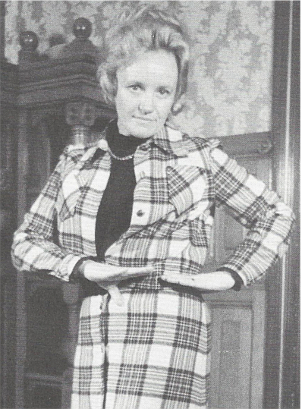
Mrs. Joanne Wilkinson, mother of six from Walnut Creek, California, was diagnosed with cancer in 1967. She had tumors effecting her left thigh, groin, hip, bladder, and kidney. Mrs. Wilkinson decided to go with Laetrile treatments. Her doctor, upset by her decision, warned her that if she did not have her left leg and part of her hip amputated, she would die in about three months.
Mrs. Wilkinson's testimony: "Dr. Krebs [referring to Byron Krebs, M.D., brother of E.T. Krebs Jr.] gave me an injection of Laetrile - and the tumor reacted. It got very large - from walnut size to the size of a small lemon - and there was bleeding four or five days. I went back on Monday, Wednesday, and Friday each week for five weeks to get injections, and |
 |
Joanne continues:
"An X-ray was taken the first Monday, and regularly after that to watch the progress. Injections were continued for six months - ten cc's three times a week and of course the diet: No dairy products nothing made with white flour - no eggs - but white fish, chicken, turkey.
And I felt wonderful! In fact, in August, 1969, the doctor told me I needed no more injections. My X-rays were clear, showing that the tumor had shrunk, was apparently encased in scar tissue, and was not active."
-"Laetrile - An Answer to Cancer?," Prevention, Dec, 1971, p. 172-175
These are not fringe, obscure cases. Some very well-known individuals, with much to lose and nothing to gain by defending Laetrile, have come forward to testify to the healing properties of B17 in relation to cancer.
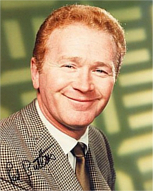 |
Red Buttons, famous comedian and actor, says his wife, Alicia, was saved by laetrile:" -Red Buttons, "Comedian Red Buttons Says 'Laetrile Saved My Wife From Death By Cancer,'" The National Tattler, Aug. 19, 1973, p. 5 |
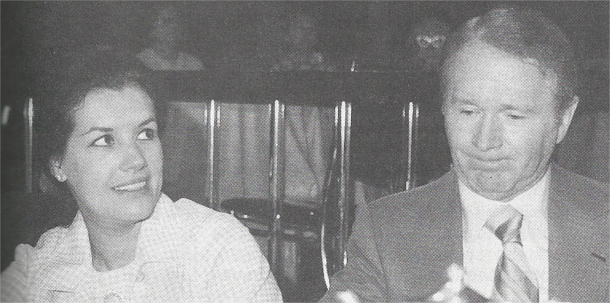
Ernst Krebs Jr. has received numerous thank you letters for his work on laetrile, that has saved so many lives.
"Dear Dr. Krebs,
Thank you for giving me another birthday (May 17). Please, again, remember November 15th, 1979, when my doctor and four other urologists gave me a maximum of four months to live with my prostate cancer, and they set up appointments for radiation and chemotherapy, which I knew would kill me if the cancer didn't, and refused their treatment. Then on Sunday afternoon I contacted you by telephone and went with your simple program.
I am 71 years old and am in my 13th year [of survival]Three of the four urologists have died with prostate cancer, and forty or fifty people are alive today, and doing very well, because they followed my "Krebs" simple program.
Thanks for giving me back my life. Your friend,
H.M. 'Bud' Robinson"
-Letter from Bud Robinson to Ernst T. Krebs, Jr., May 18, 1992
I was telling the story of B17 to a co-worker many years ago, and he found it fascinating because he said his family developed a habit of eating seeds when he was young. He remembers his grandfather having cancer, then they started ordering large amounts of seeds, then he never heard about his grandfather having cancer anymore, and to this day, his family still eats seeds on a regular basis; none of them have ever had cancer since.
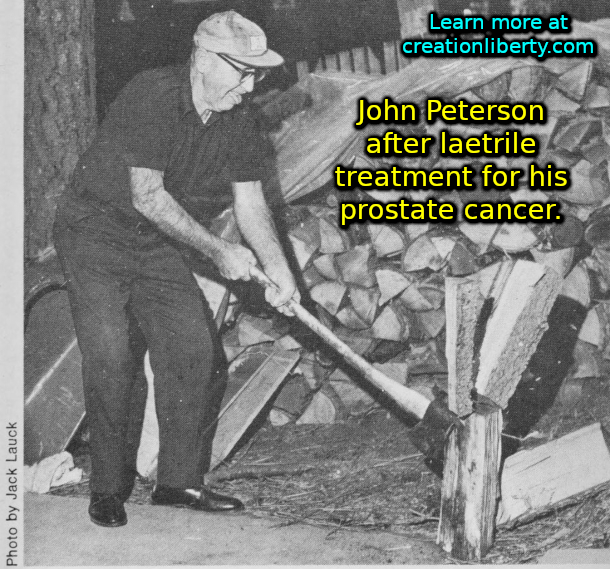
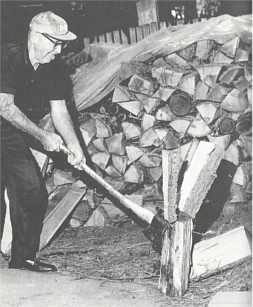
Dr. John Richardson's clinic had cured hundreds of patients before the government shut them down:"John Peterson had been -John A. Richardson, M.D., Laetrile Case Histories, 2005, p. 118, ISBN: 978-0-912986-38-8; Photo from the same source. |
 |
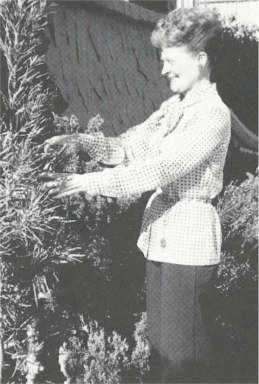 |
There are thousands of stories just like these, far more than I would have room to list here."Mrs. Lorraine Ford... suffered from -John A. Richardson, M.D., Laetrile Case Histories, 2005, p. 119, ISBN: 978-0-912986-38-8; Photo from the same source. |
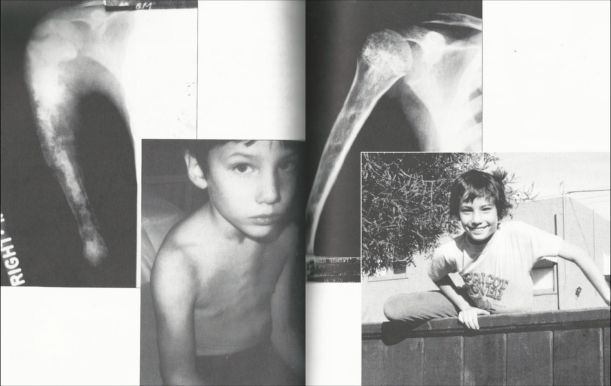
"Shane Horton was six years old when he developedosteosarcoma of the right upper arm and of the spine . This was confirmed both by X-ray and bone marrow biopsy.His doctors advised that there was no hope. It was at this point that his parents elected Laetrile therapy.Three years after beginning Laetrile therapy, all evidence of bone cancer had vanished , and Shane was enjoying the life of a completely normal nine-year-old."
-John A. Richardson, M.D., Laetrile Case Histories, 2005, p. 120-121, ISBN: 978-0-912986-38-8; Photo from the same source.
|
Concerning Brad's cancer tumor on his heart, after surgical removal of the tumor (@3:41): "We waited three months and went back to my normal work, and we came in for scans again, and the scans showed that this thing had started to grow again. So chemo was our next option because we hadn't heard of any other treatment. We had four courses of the standard chemo... got through it pretty well without many side effects, but then on our final scan, we found out that the chemo wasn't effective, and the cancer was still there... and then they suggested we have stronger doses of chemo or a stem cell transplant; together most likely, or we could have another surgery and have a lump of my lung cut out, just to make sure that they removed everything. We decided that was basically step one, back to the beginning, and we're not going to try that option again... I wasn't going to do that again... but in that time, we just found a lot of people said, hey Brad, have you heard of apricot kernels, and have you heard about diet change... well, we've got nothing to lose; the medical system was still on our side to fall back on. So for about twelve months we did apricot kernels... got into a flaxseed buckwheat diet... we were really looking forward to our next line of scans to find out if we've had any success. INTERVIEWER: "Have you had any follow-up from anyone in the cancer research industry?" BRAD: " |
Case studies are, in theory, supposed to be very closely followed from beginning to end, especially since that's how doctors can become famous in leadership around the world for their discoveries, however, it was not surprising to me, after all the research I've done, that no one followed up because once we acknowledge that the general cancer research industry is not really looking for a cure, as much as it is looking for ways to secure their financial profits, medical practioner's foolish actions become clear. Many people refuse to believe that an industry (and those working in that industry) would allow so many people to die for money, but a simply look at history, like the cigarette/tobacco industry for example, should leave us unsurprised that corporate industries would sacrifice lives to turn a profit.
The American Cancer Society doesn't have the evidence because they were not founded to look for a cure; they were founded to help the pharmaceutical industry turn a profit. It seems someone in charge does not WANT to have the evidence because there are thousands and thousands of such testimonies showing positive healing results from all around the world over the simple consumption of B17.
In 1972, an extensive research program on laetrile was conducted at Sloan-Kettering Cancer Center in Manhattan under Dr. Kanematsu Sugiura, a highly respected senior laboratory researcher with over 60 years experience.
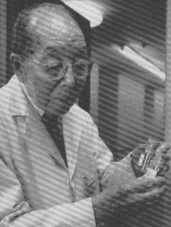 |
"The results clearly show that |
The Sloan-Kettering Cancer Center research showed these six results in the mice they tested:
|
And he said unto them, Ye are they which justify yourselves before men; but God knoweth your hearts: for that which is highly esteemed among men is abomination in the sight of God.
-Luke 16:15
|
Part of the reason the lab test results for laetrile were ignored is because the board of directors at Sloan-Kettering were unhappy with the results in Dr. Suigiura had found. Why would anyone be unhappy with positive cancer-healing results? Remember earlier in this article about the pharmaceutical takeover of schools? The Rockefellers didn't stop with just schools, they also provided funding to research institutions in exchange for putting Rockefeller-paid people on their board of directors, and the Rockefellers began to donate to Sloan-Kettering in 1927, even donating the land the building rests on today in New York, so as you can very well guess, Sloan-Kettering now operates in the best interests of the very people who sell the drugs. During the laetrile tests that Dr. Suiguira had run, there were three key people on the board of directors at Sloan-Kettering: James Rockefeller, Lawrence Rockefeller, and William Rockefeller. Since laetrile comes from nature (B17/Amygdalin), it cannot be patented, which means Rockefellers can't make money from it, so it's not in their best interest to support that specific type of cure. 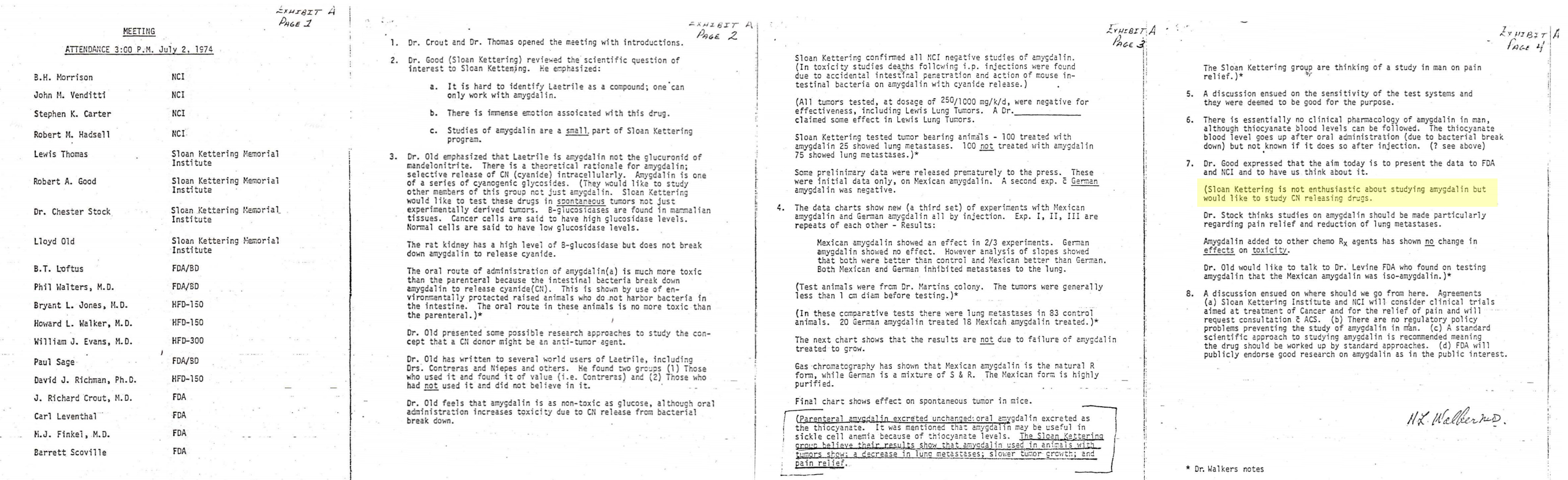 "Sloan Kettering is not enthusiastic about studying amygdalin, but -Dr. H.L. Walker, Meeting with NCI, FDA, and Sloan-Kettering, July 2, 1974, p.4 If we apply this to the example of scurvy, it's like saying, "We're not interested in Vitamin C, but we would like to study absorbic acid releasing drugs," while millions die from scurvy. This tells us everything we need to know. We know that the effects of laetrile were good enough to warrant further interest in the subject by the Rockefellers, but the "cure" discovered is not what they were interested in because it cannot be patented, and therefore they want research to continue until they can find man-made drug that can be patented for profit, and it doesn't matter if it works or not, so long as it is marketable. In the minutes, it stated: "The Sloan Kettering group believe their results show that -Dr. H.L. Walker, Meeting with NCI, FDA, and Sloan-Kettering, July 2, 1974, p.4 Yet, the media lies to the public, as this ABC news report says: "Federal health officials warned Internet users to -ABC News, "FDA Cracks Down on Laetrile Resurgence," Sept 7, 2014, retrieved Apr 11, 2015, [abcnews.go.com/Health/story?id=117990] I just read to you the minutes of the conclusion of that very 1970s report ABC News is referring to, and it DOES say that laetrile had cancer-fighting effects, but the Rockefellers were quick to shut down human testing. The media now uses terms like "resurgence" to scare the public into staying away from an actual remedy for cancer. |
In 1976, an Israeli group of physicians did research on the results of laetrile at clinics in the USA and Mexico. When they returned, Dr. David Rubin, Surgeon and Cancer Researcher at Hadassah Hospital in Jerusalem drafted their report to the Israeli Ministry of Health. Here is the conclucion of that report:
"a. Contrary to many allegations in both the scientific and lay liturature,laetrile [B17] is not quackery .
b.Laetrile is non-toxic even in very large doses .
c.Laetrile has a definite palliative [relief] effect . We cannot, at this stage of our investigations, say that it inhibits tumors, butthe evidence we have suggests that it does . We must do controlled studies to rule out the possibility that prior therapies had some effect on the turmors that stopped growing. However, we doubt that the regressions we observed were due to "delayed effects" of other therapies because, in our experience, such delayed effects rarely, if ever, occur."
-Dr. David Rubin, M.D., "Use of Laetrile in the Prevention and Treatment of Cancer," Report #2, Oct 25, 1976
But the ACS says:
"For twenty years, we have asked the proponents of Laetrile for scientific documentation of efficacy, but it has not been forthcoming. "
-Cancer Journal for Clinicians, American Cancer Society, Jan/Feb, 1976, Vol. 26, No. 1, p. 52
These six things doth the LORD hate: yea, seven are an abomination unto him: A proud look, a lying tongue, and hands that shed innocent blood, An heart that deviseth wicked imaginations, feet that be swift in running to mischief, A false witness that speaketh lies, and he that soweth discord among brethren.
-Proverbs 6:16-19
(Read "God Does Not Justify Lies" here at creationliberty.com for more details.)
.
The ACS's website states they are strongly supporting the prevention of cancer:
"[T]he American Cancer Society's Cancer Prevention & Early Detection Cancer Facts and Figures is a resource to strengthen cancer prevention and early detection efforts at the local, state, and national levels."
-American Cancer Society, "Cancer Prevention & Early Detection Facts & Figures," cancer.org, retrieved Mar 25, 2015, [cancer.org/research/cancerfactsstatistics/cancer-prevention-early-detection]
Most of the public is unaware that this is not true. Carcinogens are substances (typically chemcials) that are known to cause cancer in living tissue, and Dr. Samuel Epstein (Professor of Environmental and Occupational Medicine) reports his findings on the ACS's track record in their lack of help concerning banning the use of chemicals:
"Indeed, despite promises to the public to do everything to 'wipe out cancer in your lifetime,' the ACS fails to make its voice heard in Congress and the regulatory arena. Instead,the ACS has consistently rejected or ignored opportunities and requests from Congress, regulatory agencies, unions, and environmental and consumer organizations to provide scientific evidence critical to legislate occupational, environmental, and personal product carcinogens ."
-Samuel S. Epstein M.D., National Cancer Institute and American Cancer Society: Criminal Indifference to Cancer Prevention and Conflicts of Interest, Xilbris Corporation, 2011, p. 105, ISBN: 9781462861361
The actual track record for the ACS has been completely indifferent to the public use of cancer inducing substances.
"In 1971, when studies unequivocally proved that diethylstilbestrol (DES) caused vaginal cancers in teenaged daughters of women administered the drug during pregnancy,the ACS refused an invitation to testify at Congressional hearings to require the FDA (U. S. Food and Drug Administration) to ban its use as an animal feed additive.It gave no reason for its refusal. "
-Samuel S. Epstein, M.D., "The American Cancer Society: Why Prevent Cancer If We're Making Money On It?" Cancer Prevention Coalition, retrieved Mar, 25, 2015, [preventcancer.com/losing/acs/acs_why_prevent.htm]
"In 1977 and 1978,the ACS opposed regulations proposed for hair coloring products that contained dyes known to cause breast and liver cancer in rodents. In so doing, the ACS ignored virtually every tenet of responsible public health as these chemicals were clear-cut liver and breast carcinogens."
-Samuel S. Epstein, M.D., "The American Cancer Society: Why Prevent Cancer If We're Making Money On It?" Cancer Prevention Coalition, retrieved Mar, 25, 2015, [preventcancer.com/losing/acs/acs_why_prevent.htm]
PBS Frontline released a documentary in March of 1993 on the use of pesticides in children's food causing cancer in a number of cases, to which they won outstanding journalism awards, but the ACS, just before the release of this documentary, sided with the pesticide companies:
"In 1993, just before PBS Frontline aired the special entitled 'In Our Children's Food,' the ACS came out in support of the pesticide industry. In a damage-control memorandum sent to some 48 regional divisions,the ACS trivialized pesticides as a cause of childhood cancer, and reassured the public that carcinogenic pesticide residues in food are safe, even for babies . When the media and concerned citizens called local ACS chapters, they received reassurances from an ACS memorandum by its vice president for Public Relations: 'The primary health hazards of pesticides are from direct contact with the chemicals at potentially high doses, for example, farm workers who apply the chemicals and work in the fields after the pesticides have been applied, and people living near aerially sprayed fields... The American Cancer Society believes that the benefits of a balanced diet rich in fruits and vegetables far outweigh the largely theoretical risks posed by occasional, very low pesticide residue levels in foods.'"
-Samuel S. Epstein, M.D., "The American Cancer Society: Why Prevent Cancer If We're Making Money On It?" Cancer Prevention Coalition, retrieved Mar, 25, 2015, [preventcancer.com/losing/acs/acs_why_prevent.htm]
But despite the ACS trying to justify the use of cancer-inducing chemicals in foods, the National Resource Defense Council took action and got results a few years later:
"The National Academies report on pesticides and children's health, along with intense pressure from NRDC and others,led Congress to unanimously pass the Food Quality Protection Act (FQPA) in 1996 , requiring EPA to consider harm to children when registering pesticides, and to consider risks to groups of related pesticides and not just evaluate them one-by-one. Subsequent negotiations with NRDC forced EPA to review pesticide registrations every 15 years to incorporate new science. Together, these two requirements haveforced millions of pounds of the most toxic pesticides off the market and out of our homes, gardens, and food crops."
-National Resource Defense Council, "The Food Quality Protection Act Helps Protect Kids," retrieved Mar 25, 2015, [nrdc.org/health/pesticides]
I am NOT endorsing any of these organizations; I am simply explaining, in this context, that the ACS has had clear opportunity to help in the prevention of chemicals that are harmful in the realm of inducing cancer, but they refuse to act, and worse still, they attempt to justify the chemicals. This is a good time to repeat what was stated earlier:
"The American Medical Association has strong ties to pharaceutical companies, andthe American Cancer Society owns half of the patent rights of chemotherapy drugs ."
-Zillah R. Eisenstein, Manmade Breast Cancers, Cornell University Press, 2001, p. 101, ISBN: 9780801487071; Eisenstein is a professor and Chair of Politics at Ithaca College in New York.
The ACS owns the patent rights on many chemicals, and therefore would have certain obligations to protect companies that produce their chemical compounds. This is why they do so little when it comes to protecting the public, as was stated in a 1994 Center for Science in the Public Interest press release:
"A group of 24 scientists charged thatACS was doing little to protect the public from cancer-causing chemicals in the environment and workplace. The scientists urged ACS to revamp its policies and to emphasize prevention in its lobbying and educational campaigns."
-Center for Science in the Public Interest, Jan 23, 1994, New York City, quoted by Samuel S. Epstein, Cancer-Gate: How to Win the Losing Cancer War, Baywood Publishing Company Inc., 2005, p. 84, ISBN: 9780895033543
If the ACS were to start fighting against the chemical industry's sales of harmful chemicals, they would also have to account for how their own patents on chemicals are justified, which they do through the use of chemotherapy. However, chemotherapy is a realm of "medical science" that has no evidence to it whatsoever:
"Success of most chemotherapies is appalling...There is no scientific evidence for its ability to extend in any appreciable way the lives of patients suffering from the most common organic cancer...Chemotherapy for malignancies too advanced for surgery, which accounts for 80% of all cancers, is a scientific wasteland. "
-Abel Ulrich, PhD, "Chemotherapy of Advanced Epithelial Cancer," quoted by Don Benjamin, "Submission to Inquiry Into Services and Treatment Options for Persons With Cancer," Cancer Information & Support Society, Australian Senate, March 2005, retrieved Mar 25, 2015, [aph.gov.au/~/media/wopapub/senate/committee/clac_ctte/completed_inquiries/2004_07/cancer/submissions/
sub15_pdf.ashx]
It is no secret that those who have chemo-"therapy" end up dying a few years later. Before Michael Landon died of prostate cancer in 1991, he consulted with the "top experts" that money could buy, and of course, they all recommended chemo. Landon's daughter quoted him in her book:
"'That's the only hope they see,' wrote Dad. Buthe also knew that chemotherapy's rate of success was 'really zero. Less than one percent of the patients treated are alive at the end of five years. And,' continued Dad, 'I'm not sure in these cases what alive means.' Dad was well aware of the horrendous effects that huge doses of chemotherapy had on the body: the sores in the mouth, the peeling skin, the hair falling out and the gradual breakdown of major organs... 'You can die of the cure before you die of the disease,' he commented."
-Cheryl Landon Wilson, I Promised My Dad: An Intimate Portairt of Michael Landon by His Eldest Daughter, Simon & Schuster, 1992, p. 185-186, ISBN: 0671793527
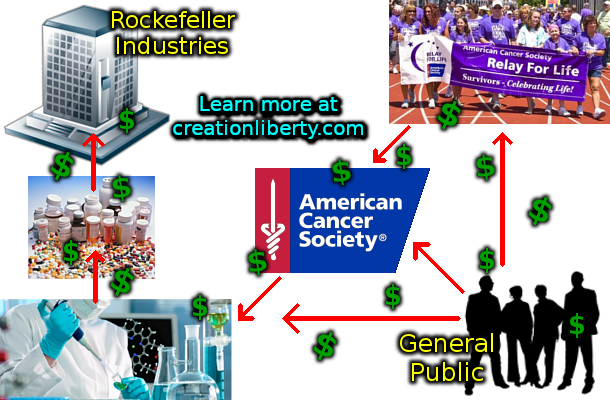
What the average person doesn't seem to understand is that when someone makes a donation to the American Cancer Society, that money is used in research as they claim, but the research they're doing is not to cure cancer, but to find a way to extend their total number of patents to turn a profit. The research being done is only in areas that force someone to take an ADA-approved "treatment," or something in a man-made pill form, and this is so the results of the research can be patented and marketed for the benefit of the very corporate interests that are looking to create a monopoly on a product.
So we either believe that those with money and power would never lie to us, and that they always have our personal best interests in the forefront of their minds, or you have to believe that experiments on laetrile, from people all around the world (who didn't know each other and had nothing to gain), were all a giant conspiracy against mankind. Sadly, for most people, they will never consider either point, and just continue to blindly pour out money, putting their hopes in a rigged game.
"Spokesmen for orthodox medicine - and particularly for the American Cancer Society - continue to cloak themselves in the mantle of their own prestige, deride any scientific opinion that differes from their own, and categorically denounce as absurd those things which they do not understand. Laetrile is the current victim of such scientific arrogance and ignorance."
-John A. Richardson, M.D., Laetrile Case Histories, 2005, p. 34, ISBN: 978-0-912986-38-8
It's not just the corporate conflict of interest, as some investigators are starting to come out with the truth on the financial reports surrounding the ACS. It's get a bit tricky because there are companies that organizations like the ACS hire, which end up getting most of the profits from your donations -- these are called "solicitors," and the ACS enlisted InfoCision from 1999 to 2011.
"In fiscal 2010, InfoCision gathered $5.3 million for the society. Hundreds of thousands of volunteers took part, butnone of that money -- not one penny -- went to fund cancer research or help patients , according to the society's filing with the U.S. Internal Revenue Service and the state of Maine."
-David M. Evans, "Charities Deceive Donors Unaware Money Goes to a Telemarketer," Bloomberg Business, Sept 12, 2014, retrieved Mar 27, 2015, [bloomberg.com/news/articles/2012-09-12/charities-deceive-donors-unaware-money-goes-to-a-telemarketer]
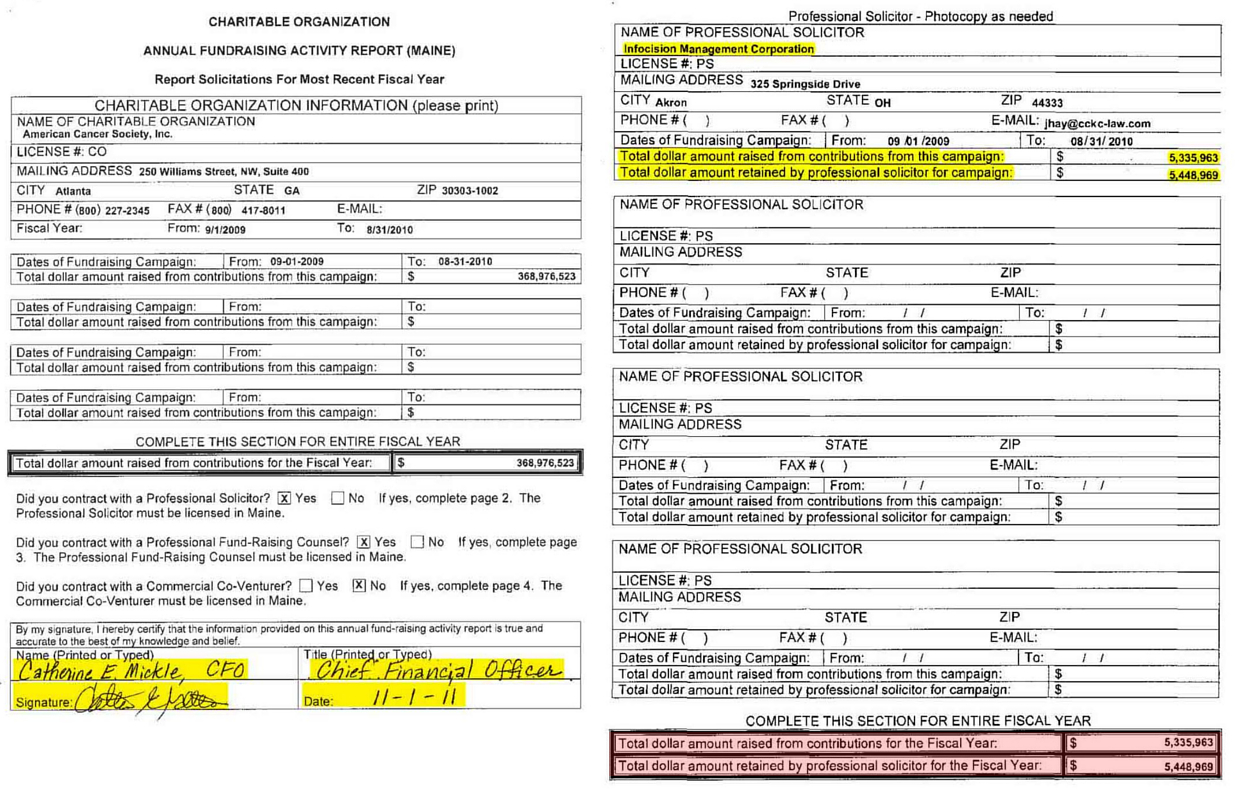
And it's not just the American Cancer Society; many so-called "charities" are flooded with corporate conflicts of interest, and many of them don't spend hardly any money they receive on the actual charity program they claim to support. The Tampa Bay Times and the Center for Investigative Reporting pulled out the federal tax filings from the past ten years on many major charity funds, and came up with a list of the top ranking worst charities in America.
|
"The 50 worst charities in America devoteless than 4% of donations raised to direct cash aid . Some charities gave even less. Over a decade, one diabetes charity raised nearly $14 million and gave about $10,000 to patients.Six spent no cash at all on their cause. "
-Kris Hundley & Kendall Taggart, "Above The Law: America's Worst Charities," CNN, Jun 13, 2013, retrieved Mar 27, 2015, [cnn.com/2013/06/13/us/worst-charities/index.html?c=homepage-t]
During the 2020 election season in the United States, researchers were investigating Senator Joe Biden, a former U.S. vice-president who (as of 2020, when he ran for president) is being investigated for various criminal activities, and those researchers discovered that Biden had his own cancer research charity organization called The Biden Cancer Initiative. Even though Biden spent many millions of dollars of donations on salaries for employees, tax records show that he did not spend one dollar on cancer research, and he never gave out one grant:
"A cancer charity started by Joe Biden gave out no money to research, and spent most of its contributions on staff salaries , federal filings show. The Biden Cancer Initiative was founded in 2017 by the former vice president and his wife, Jill Biden, to 'develop and drive implementation of solutions to accelerate progress in cancer prevention, detection, diagnosis, research and care and to reduce disparities in cancer outcomes,' according to its IRS mission statement.But it gave out no grants in its first two years, and spent millions on the salaries of former Washington, DC, aides it hired. "
-Isabel Vincent, "Tax filings reveal Biden cancer charity spent millions on salaries, zero on research," New York Post, Nov 14, 2020, retrieved Nov 16, 2020, [https://bit.ly/38PKMsu]
The article goes on to point out that Biden hired many of he personal friends and collegues, including Gregory Simon, a former Pfizer (pharmaceutical company) executive, and Danielle Carnival, Barack Obama's former chief of staff, just to name a couple. Biden's friends made anywhere from $250,000 to $430,000 in a single fiscal year, all paid for by the charitable donations of Americans looking to help their loved one, and any other money that left over went to pay for their meals, travel, hotel rooms, and to put on lavish conferences for their scam charity.
In fact, if you want to know how "charitable" Joe Biden is, reporters discovered that, as of 2008, Biden and his wife had only given an average of $369 a year to charity, meaning that he is more than happy to take millions from average middle class workers and give it to his friends, but not will to step up on his own dime to help others:
"Democratic vice presidential candidateJoe Biden and his wife gave an average of $369 a year to charity during the past decade , his tax records show. Democratic presidential nominee Barack Obama's campaign today released 10 years' worth of tax returns for Biden, a senator from Delaware, and his wife Jill, a community college instructor. The Bidens reported earning $319,853 last year, including $71,000 in royalties for his memoir, Promises to Keep: On Life and Politics. The Bidens reported giving $995 in charitable donations last year — about 0.3% of their income and the highest amount in the past decade. The low was $120 in 1999, about 0.1% of yearly income.Over the decade, the Bidens reported a total of $3,690 in charitable donations, or 0.2% of their income. "
-Matt Kelley, "Biden gave average of $369 to charity a year," USA Today, Sept 12, 2008, retrieved Nov 16, 2020, [abcnews.go.com/Politics/story?id=5791846&page=1]
This is why, in many of our audio teachings, I have warned people not to just throw money at something and call it "charity," because, in most cases, real charity takes people being involved in their giving. If you really want to be charitable to cancer patients, why not visit a cancer ward of a hospital, find a child with cancer, and spend some time with them? If you want to really help the families of cancer patients, why not print off this article and take it to them along with some apricot seeds?
Not only is a huge percentage of these funds going to secure the financial interests of the wealthy, but what little they actually give to the cause goes back into more pills and radiation research which keeps people deep in sickness and debt.
There is a way which seemeth right unto a man, but the end thereof are the ways of death.
-Proverbs 14:12
Prove all things; hold fast that which is good.
-1 Thessalonians 5:21
.
There are cases where someone is accused, arrested, and convicted properly of a crime they are guilty of committing. There are cases where someone is accused and arrested, but found innocent of the crime. However, most importantly, there are people who are accused and arrested on something they did not do wrong, but are found guilty and punished anyway, and these are the cases that the general public almost never hears about.
| For example, the man in the photograph was arrested for his realistic costume at a themed convention. He was dressed up as a SWAT team soldier, and someone called the police out of fear. He was arrested, handcuffed, and detained for a short time, but he was innocent of any crime. Yet, if you were to simply look at this picture from the news report, without any further details, you would think this man was guilty of breaking the law, because after all, he's being handcuffed by police, so the assumption is that he's guilty. |  |
Accusation of guilt by simply seeing someone arrested on television is called "trial by media," which creates an assumption of guilt by majority opinion whether or not the person is guilt. This is not some recently developed tactic either; it has been used for thousands of years by many governments.
For example, the Catholic Church, for 605 years of The Inquisition, tortured and murdered Christians for their faith in Jesus Christ and the Holy Scriptures. Some were imprisoned and/or executed for simply owning a Bible, all because the Catholic Church didn't like people reading it. Many of these Christians were handcuffed, and taken away by the "authorities," to be publically displayed and labeled heretics, even though they committed no crime, nor were allowed to give a response, but were used to make an example to the public, similar to how a school bully makes an example of a child who cannot defend himself.
(See "Corruptions of Christianity: Catholicism - The Inquisition" for more details; See also John Foxe, Foxe's Book of Martyrs, W. Grinton Berry Edition, 2003, ISBN: 0-8007-8664-5)
Trial by media has been common in supressing the cure for cancer. Laetrile clinics specifically have been hit hard and fast by government enforcers, and we'll take a closer look at Dr. Maurice Kowan who was healing many cancer patients in his clinic, but was arrested and put on trial for the "crime" of using laetrile as a cancer control.
"A Los Angeles physician has beenindicted by the county Grand Jury on charges of attempted grand theft for the alleged illegal use of drugs to remedy cancer , it had been announced today. Named in the indictment was Dr. Maurice H. Kowan... He also was charged withviolating the state Cancer Control Act by purportedly representing to a patient that Laetriles, a drug made from the extract of apricot pits, would alleviate or cure cancer ."
-"Jury Indicts Physician in Cancer Cure," Valley News, Van Nuys, California, Sept 19, 1968, p. 78
During Dr. Kowan's trial, the jury was not allowed to see any of the clinic's results that laetrile was curing the cancer patients, and no witnesses were allowed for that purpose. The Jury was railroaded into a guilty verdict, and Ira Reiner, the prosecuting attorney, faced the jury and stated:
"This is not a kindly old man.This is the most thoroughly evil person the imagination can concoct. He's taking advantage of people for money. We can understand people who kill in rage. What do you think of a man who can kill at nine dollars per visit?... This man has to be stopped. He is very dangerous. This case goes far beyond the walls of this courtroom. The way to stop him is a guilty verdict."
-"Kowan Trial Nearing End in City Court," L.A. News-Herald and Journal, July 23, 1967
It's sad that, although Kowan was only charging $9 per visit for getting rid of peoples' cancer, the media and courts justify radiation "therapy," which costs so much that the American Cancer Society won't even publish it on their website when asked the question, "
(See American Cancer Society, "How much does radiation treatment cost?" cancer.org, retrieved Mar 26, 2015, [cancer.org/treatment/treatmentsandsideeffects/treatmenttypes/radiation/
understandingradiationtherapyaguideforpatientsandfamilies/understanding-radiation-therapy-cost])
Sandi Rog, a cancer survivor who cured her cancer with laetrile, recounts her costs with, and around, her radiation treatments:
"It was around that time, shortly after radiation, that I went to see my naturopathic doc in AZ. He put me on a 'million' supplements (okay, it felt like a million; I had about twenty bottles of supplements prescribed by him). Andvisiting him cost us approximately 1200 to 1700 dollars a day (yes, PER DAY—and that was with HUGE discounts), plus another 9800 dollars for one particular IV. "
-Sandi Rog, "My Cancer Story," Aug 23, 2012, retrieved Mar 26, 2015, [beatcancerwithb17.blogspot.com/p/my-win-against-cancer.html]
But Dr. Kowan's $9 per visit charge made him into a "very dangerous" man that takes "advantage of people for money." Kowan was pressured to sign an agreement that laetrile had no effect against cancer, but he refused to sign, and was charged a $3,000 fine, three months in prison, and was prohibited from seeing a cancer patient for three years, all for the "crime" of saving lives because in America, you don't dare challenge the wealth of the ruling elite.
Earlier, I published some testimonies from patients who had been cured by laetrile through Dr. John Richardson's clinic, and his reward for helping these people was being arrested:
"After my release following the first arrest, I went home and spent the evening in a state of semi-shock. Before the week was over, I came to learn firsthand the tremendous power of TV and the press.My acquaintances, neighbors, and even many of my patients had begun to keep their distance and now were viewing me with a mixture of caution and distrust. After all, I had been arrested. "
-John A. Richardson, M.D., Laetrile Case Histories, 2005, p. 79, ISBN: 978-0-912986-38-8
During this time, Richardson was put through a trial where the prosecution made him look like a quack that was responsible for the deaths of uncountable numbers of people, but despite their intense propaganda, the jury came back with seven to five in favor of the defendant being not guilty. The pharmaceutical companies cannot have the public winning cases in favor of the cure for cancer, so a few days after the first long and expensive trial, the state decided to try the case a second time, which would normally be illegal and unconstitutional.
"The trial was almost a carbon copy of the previous one with one exception: the jury. As we were to learn later, there were several members of the jury who appeared to be personally interesteed in convincing the others to find me guilty.Juror Lela Herbert told us later that she was offered financial help for her decorator shop if only she would change her vote to 'guilty.' Between shouting insults and threats, on the one hand, and offers of money, on the other, they literally had her in tears. Several of the others ultimately changed their votes under similar pressure, but she stood firm and would not compromise her convictions. The final vote was eleven to one."
-John A. Richardson, M.D., Laetrile Case Histories, 2005, p. 81, ISBN: 978-0-912986-38-8
And it's not just John Richardson -- it's anyone who dares to cure cancer outside of the patented permission of the AMA, ACS, and associated cartels. With major corporate wealth backing chemicals and radiation, they can bribe just about anyone in the government to do their bidding.
Dr. Stewart Jones of Palo Alto, CA, was being hunted by James Eddington, head of the Berkeley fraud division, and ordered one of his undercover agents, Natasha Benton, to lie in her report about Dr. Jones's use of Laetrile. Outside the court room, the defense attorney overheard Ms. Benton arguing with her boss that she would not lie on the witness stand, and so the prosecution chose not to call her to the stand. However, the defense DID call her up to the stand:
"BENTON: Before any report is always written, Mr. Eddington left instruction what for me to write. After I read these instructions, I telephoned Mr. Eddington telling him I didn't feel all those instructions were correct. He told me, 'Go ahead and write what I said, because this is what we need to get a conviction .' I wrote as close to what he said as I could, according to my conscience. But I still don't feel that I told the truth in that report. Later, on June 1st, I was shown a quite lengthy report. He told me to sign that report before I went before the Grand Jury, and I could read it later; we didn't have time at that time.
DEFENSE ATTORNEY:Did you sign that report without reading it?
BENTON:Yes, I did. Later I read a small portion of it. That isn't the report I wrote. Outside of this courtroom he admitted that it isn't the report I wrote. He said my report - quote - was so sh**ty, that that's why he changed it - close quote."
-John A. Richardson, M.D., Laetrile Case Histories, 2005, p. 82, ISBN: 978-0-912986-38-8
James Eddington was also the same man who approached Dr. Richardson's patients and families to get them to sue Richardson for malpractice. The media doesn't point out these details, but they do take it upon themselves to fuel the fire for burning doctors in their Inquisitor-like witch hunts, as The Standford Daily reported on Dr. Jones:
"Earlier Friday, Louis Castro, deputy state attorney general prosecuting Jones, said that many patients died 'a very miserable and painful death because they were relying on Laetrile...There is one thing that all quacks have in common: they disregard the rules of evidence ... The scientific method simply does not exist in the quack mind."
-Bob Zuckerman, "Hearing Probes Laetrile Case," The Standford Daily, Vol. 167, Issue 12, Feb 19, 1975, p. 1
The problem is that most patients who go to laetrile as a treatment, do so as a LAST RESORT, meaning that they have already gone through radiation injections that have done a large amount of permenant damage to their bodies. Many patients who turn to laetrile too late, and even after laetrile fixes the cancer problem, he/she will still die from the damage already done to their internal organs through radiation, but in the media, it's laetrile that takes the blame for it.
While mainstream media helps the public remain ignorant of the truth, the American Cancer Society, with support of the mainstream media, tells the public that chemotherapy is a "proven" cure.
"There areproven cures ...surgery and/or radiation and, more and more, chemotherapy is playing a part."
-Letter from Mabel Burnett, American Cancer Society Headquarters, to Dr. John Richardson, Dec 18, 1972
If these liars and hypocrites would stop playing Duck Hunt against honest physicians and listen for a few minutes, they might find some interesting evidence:
"A survvey of128 US cancer doctors found that if they contracted cancer, more than 80 per cent would not have chemotherapy as the 'risks and side effects far outweighed the likely benefits' ."
-Cancer Active, "20 Things You Need to Know About Chemotherapy," retrieved Mar 31, 2015, [canceractive.com/cancer-active-page-link.aspx?n=248]
A professor of oncology at the State University of New York said:
"Many medical oncologists recommend chemotherapy for virtually any tumor, with a hopefulness undiscouraged by almost invariable failure.Most cancer patients in this country die of chemotherapy. Chemotherapy does not eliminate breast, colon, or lung cancers. This fact has been documented for over a decade, yet doctors still use chemotherapy for these tumors. "
-Albert Braverman, M.D., quoted by Raymond Francis, Never Fear Cancer Again: How to Prevent and Reverse Cancer, Health Communications Inc., 2011, p. 26, ISBN: 9780757391903
| These professionals are warning you that chemotherapy does not work. |
The late oncologist Glen Warner said:
"We have a multi-billion dollar industry that is killing people, right and left, just for financial gain. Their idea of research is to see whether two doses of this poison is better than three doses of that poison."
-Glen Warner, M.D., quoted by Peter Havasi, Education of Cancer Healing, Lulu.com, Vol. 2, p. 59, ISBN: 9781291453584
A former president of the American Chemical Society stated:
"As a chemist trained to interpret data, it is incomprehensible to me that physicians can ignore the clear evidence thatchemotherapy does much, much more harm than good ."
-Alan Nixon, PhD, quoted by Andreas Moritz, Timeless Secrets of Health and Rejuvenation, Ener-Chi Wellness Center, 2007, p. 338, ISBN: 9780979275753
French cancer specialist Charles Mathe stated:
"If I contracted cancer, I would never go to a standard cancer treatment centre. Only cancer victims who live far from such centres have a chance. Yet, day after day, year after year, the Cancer Industry continues to put these toxic chemicals into the bodies of cancer patients. And the patients let them do it, even volunteering for new 'guinea pig' studies, simply because someone with a degree from a school of disease (also known as medical school) told them it was their 'only option.' It costs lots of money for them to poison the body of cancer patients, and the patients gladly pay it.Sadly, some people will spend six figures a year poisoning their bodies because their 'doctor told them to do it.' The truth is that there are many effective natural cancer treatments that don't require a barbaric procedure like chemotherapy. '"
-Charles Mathe, PhD, quoted by Margaret B. Mba, The Cancer Odyssey, Xlibris Corporation, 2011, p. 50, ISBN: 9781456885397
But let's see what happens when someone actually cures himself of cancer outside of the approved raditation death treatment:
Jason Vale got into trouble because the FDA says you can't claim laetrile is a cure while selling it. I can say these apricots seeds cure cancer all I want because I'm not selling anything, but Vale went into business over it. That's where the government attacks, through corporate business, because it's too much labor to unconstitutionally try to attack people who want to use apricot seeds to cure themselves of cancer, but if no one can sell it, no one can get to it.
Jason Vale didn't understand the whole story, and got himself into a mess he may never get out of because there are major corporate interests that are threatened by these seeds. In the video above, you'll notice that the media never once even mentions the many people who have been healed from B17, even though many thousands of Americans have been more than willing to come out and testify to their healing of cancer through the consumption of apricot seeds.
(For testimony, see John A. Richardson, M.D., Laetrile Case Histories, 2005, ISBN: 978-0-912986-38-8; For details on chemotherapy death rate statistics, and how the real results are kept quiet, see Dr. Ralph Moss, Questioning Chemotherapy, 1995, ISBN: 978-1881025252)
It is interesting to note that the chemicals initially used when radiation therapy was in its infant stages was mustard gas used by the Germans in World War II.
(See -Charlotte Jacobs, Henry Kaplan and the Story of Hodgkin's Disease, Standford University Press, 2010, p. 83, ISBN: 9780804774482)
"[S]ystemiccancer chemotherapy is a recent development with itshistorical origins in observations of the toxic effects on humans accidentally exposed to chemical warfare agents, mainlymustard gas, during WWI and WWII ,"
-Guy Faguet, The War on Cancer: An Anatomy of Failure, Springer Science & Business Media, 2008, p. 69, ISBN: 9781402036170
"[T]he first class of 'modern' cancer chemotherapeutic drugs were born from the observation that 'mustard gas' developed as a military antipersonnel weapon in World War II caused lymphoid and bone marrow suppression. "
-Michael C. Perry, The Chemotherapy Source Book, Lippincott Williams & Wilkins, 2008, p. 30, ISBN: 9780781773287
While there are no laws that ban the use of laetrile, there are "regulations" set by the AMA and the FDA (Federal Drug Administration) that prohibit its use for the treatment of cancer in the United States, but they turn around and approve the use of varities of mustard gas to poison people directly. So who is the true snake-oil salesman? Simply because they put regulations on it, the people then fear laetrile, and because there are not restrictions on radiation and poisoning, people trust it. This is not only trial by media, but also testing by media, and the people continue to believe that large money-making organizations would never cause them any harm in order to make more money.
Thus saith the LORD; Cursed be the man that trusteth in man, and maketh flesh his arm, and whose heart departeth from the LORD.
-Jeremiah 17:5
It is better to trust in the LORD than to put confidence in man.
-Psalm 118:8
.
It sounds good on the outside, but once we look deeper, we see a bunch of people throwing money at a problem, and they don't care where that money goes, so long as it says "cancer prevention" on it. It is this very lackadaisical ignorance that has allowed cancer to become such a ridiculous epidemic in the U.S.
Rather, I would like people to start putting themselves in the shoes of the very medical practitioners they so highly esteem. In the hearts and minds of the average American citizen, if someone is a doctor, he/she can do no wrong, and always has the best interests of their patients in mind, and that would be a wonderful world to live in, but in reality, we live in a world of sin.
As it is written, There is none righteous, no, not one:
-Romans 3:10
For all have sinned, and come short of the glory of God;
-Romans 3:23
The heart is deceitful above all things, and desperately wicked: who can know it?
-Jeremiah 17:9
So let's imagine you're a medical practitioner. You have a nice home, a wonderful family, top-of-the-line car, and a well-established clinic in a town where you are highly respected after you spent eight or ten years and hundreds of thousands of dollars in medical school. Everyone comes to you for advice, and you've been sending them to pharmaceutical pills and chemotherapy.
 |
Now let's imagine you have an author like me, a college drop out, that comes along and tells you that, through your ignorance, you've been responsible for poisoning and killing your patients with drugs and radiation, and that despite all your intelligence and degrees, the cure for cancer is growing on a tree in my backyard, and that if you stand up for this cure, you will lose your clinic, your income, your respect of the community, face fines and jail time, and lose everything you've worked for -- so be honest: How likely are you to listen to me? |
Of course the average American jeers at me because I'm just some nobody and these doctors are prestigious and professionally trained in medicine, but whether or not one has a college degree is not a reflection on knowledge. Henry Ford dropped out of high school at 16. Bill Gates dropped out of college at 19. Michael Dell dropped out of college at 19. Steve Jobs dropped out of college at 21. Elizabeth Holmes, who Forbes 400 named the "youngest self-made woman billionaire" dropped out of college at 19, which goes to demonstrate that the degrees are held up in our society as a respect of persons, which the Bible says is sin, and that we should not judge a person based on the lack of a title, but on the merits of truth.
(Read "Respecting Persons is Sin" here at creationliberty.com for more details.)
But if ye have respect to persons, ye commit sin, and are convinced of the law as transgressors.
-James 2:9
(See "The United Vacci-Nations" for details on the focus of drugs and pharmaceuticals, rather than health and well-being.)
Most doctors simply refuse to investigate/research any possibility that goes against the direct orders of the AMA, because if they do, they will be shunned out of their practice, and prevented from practicing medicine in the U.S., losing all the years and hundreds of thousands of dollars of investments and schooling they had to go through. Again, the risk is just too high to sacrifice all that for the health and well-being of people they don't even know. I know it is difficult for many people to think of others in that way, but the truth of the matter is that those who would sacrifice their lives to keep their hippocratic oath are far and few between, and most will continue to pump their patients full of harmful chemicals, killing them slowly with each dose.
|
The original Hippocratic Oath was swearing unto pagan gods and goddesses: " -Kenneth C. Davis, Don't Know Much About Mythology, HarperCollins, 2009, p. 230, ISBN: 9780061925757 This oath was born out of an evil tree of paganism and witchcraft. Today they simply swear in general, but the Bible is clear on this issue:
But I say unto you, Swear not at all; neither by heaven; for it is God's throne: Nor by the earth; for it is his footstool: neither by Jerusalem; for it is the city of the great King. Neither shalt thou swear by thy head, because thou canst not make one hair white or black. But let your communication be, Yea, yea; Nay, nay: for whatsoever is more than these cometh of evil. "I swear to fulfill, to the best of my ability and judgment, this covenant: -Hippocratic Oath (Modern Version - Written in 1964), Johns Hopkins Sheridan Libraries, retrieved Oct 12, 2013, [http://guides.library.jhu.edu/content.php?pid=23699&sid=190964]
It is not good to have respect of persons in judgment. "I will apply, for the benefit of the sick, -Hippocratic Oath (Modern Version - Written in 1964), Johns Hopkins Sheridan Libraries, retrieved Oct 12, 2013, [http://guides.library.jhu.edu/content.php?pid=23699&sid=190964] Mustard gas is being used "for the benefit of the sick," and they will end up using "all measures which are required," which means they will follow the standards set by the AMA and FDA for chemotherapy treatment in poisoning their victims. It doesn't matter if a drug is poisoning your body, as long as it is AMA/FDA approved, it will be used on the sick anyway, despite the risks, and the patients will remain unsuspecting and unquestioning to a fault, because they have been taught that doctors are people that can be trusted, all the while a large profit is being made behind the scenes. |
The legal restrictions on drug prescriptions only coming from a licensed medical practitioner is portrayed in the media as a protective restriction that keeps criminals from accessing it, but in reality, that restriction is in place to keep the average person from making the product to protect corporate profits. These profits are shared with the doctors themselves, which how many of them make most of their money.
(Read Psychology: Hoodwinked by the Devil here at creationliberty.com for more details.)
Former big pharma sales rep Angie Maher, who had worked for four different companies during her career, said in an interview:
"The companies, all four companies that I worked for, at the beginning of the year they will give a list of the top prescribing 20 physicians in the territory, and as a pharmaceutical marketing rep, it's my responsibility to pick three doctors. I have to find three doctors, andI get paid a bonus when I develop a doctor to be a key opinion leader or a thought leader. And I essentially say to a doctor, hey, our company has identified you to be a thought leader. Would you like to be a thought leader for our company? The doctor will normally almost every time say yes and then the next step is that the doctor will have to find ten patients to try the drug out. "
-Angie Maher, interview with Sanjay Gupta, "Big Pharma's Big Payout," Cable News Network, Nov 23, 2010, retrieved Feb 8, 2019, [transcripts.cnn.com/TRANSCRIPTS/1011/23/acd.02.html]
We have to acknowledge the fact that most doctors in America make an enormous amount of money in drug sales, and this includes the sale of chemicals used in radiation therapy. I know most peoples' thought is that the doctors have the best of intentions with their patients, but the road to hell is paved with those very same intentions.
If you want your family to stay healthy, then the best thing to do is start doing research yourself so you can make educated decisions, instead of putting your trust in someone who only makes money off you when you're ill. If this article has helped you, and you think it can help someone else, please share it with others because we cannot just sit back and wait for our government, media, and medical institutions to speak the truth. Word of mouth, and individual education, is the only way that lives will be saved, so please take the time to pass this along in hopes that they would be saved by the natural healing of the Lord God.
.
|
|
I have to apologize for anyone who has followed our website on this topic in prior versions of this article, as I've previously taught that Laetrile was made illegal in the United States back in the 1980s, which is actually not true. The reality is that the FDA (Food and Drug Administration) claims to have legal jurisdiction over Laetrile based on the Food, Drug and Cosmetic Act amendment of 1962, also known as the Kefauver Harris Amendment, which requires drug manufacturers to provide proof of effectiveness of their drugs before they can be sold, so because the FDA bases their information on the 1953 McDonald and Garland report that lied and said there was no effectiveness of Laetrile, therefore, they prohibit its sale in the U.S.
However, what most people don't know is that the amendment does not apply to substances commonly in use before the amendment was passed, otherwise you would end up with a mass lawsuit frenzy for a retroactive act. (Retroactive meaning that people would be punished for a past crime to which there was no law or regulation for it yet.) The substances commonly sold on the market prior to the 1962 amendment were "grandfathered" in, and the FDA has stated that amygdalin (Laetrile) was sold for treatment of cancer prior to 1962.
(See Dean Burk, "Fact Sheet," National Health Federation Newsletter, January, 1977, p. 3)
"[T]he Circuit Court emphasizes that Laetrile is not to be considered a 'new drug' under the law merely because the FDA has said so, but rather that said determination must be supported by substantial evidence. The statutory presumption in favor of administrative determinations is based on the premise that such determinations are presumed to be supported by substantial evidence until a reviewing court has determined otherwise. Such presumption was overcome when FDA counsel admitted that no competent administrative record had ever been developed in support of the agency's determination. As a matter of law then, such determination is not supported by substantial evidence and cannot be sustained... the Court then requested that the FDA make available to the Court the written basis for the agency's determination with regard to Laetrile, no matter how casual or unstructured its form or content might be; whereupon the Court was advised that no such rationale existed in any form. Clearly, federal agencies may not rule by fiat invoking only some unexplained application of their own expertise in defense of policy decisions they have made...
Based on the complete absence of any evidence tending to establish a rational basis for the agency's determination , the Court would also be compelled to find... thatthe agency's determination was 'arbitrary, capricious,' and represented 'an abuse of discretion,' and that it should also be overturned for these additional reasons. "
-Rutherford v. United States, NO. CIV-75-0218-B, "Memorandum Opinion and Order," 424 F. Supp. 107 (1977), United States District Court, W.D. Oklahoma, Jan 4, 1977
In case you did not understand what was just stated, since substances before the 1962 amendment are not automatically under FDA jurisdiction, if the FDA wants to go after a certain drug in sale before 1962, they need to make a formal case against it and bring it to court. The FDA did not want to do this because bringing Laetrile into a court trial under the basis of evidence would allow the public to finally see the records of the positive test results for Laetrile, as well as eye-witness testimonies, which would solidify the case FOR Laetrile instead of against it, and so the FDA, in deceptive fashion, tried to secretly include Laetrile under the 1962 amendment by labeling it a "new drug," to which the Supreme Court shot it down and told them, in simple terms, "No, you're going to abide by the rules like everyone else."
Dr. John Richardson tells us that even the U.S. Customs Service Office has no record of a prohibition on laetrile 13 years after the 1962 amendment:
"In June of 1975, attorney Richard Frisk contacted the U.S. Customs Office in San Francisco and asked for a list of any drugs or similar substances that were illegal to bring into the country. He asked specifically if Letrile or amygdalin was on that list. In a swarn affidavit dated November 11, 1975, Frisk stated that he 'was told by the different officials in the Customs Service Office thatthere was no proscribed drug or substance list, that Laetrile or amygdalin was not on a proscribed list , and that only certain dairy products were proscribed.' When he asked them to confirm that in writing, they refused."
-John A. Richardson, M.D., Laetrile Case Histories, 2005, p. 100-101, ISBN: 978-0-912986-38-8
In 1975, a cancer patient tried to sue the FDA for restricting laetrile:
"Last spring a cancer patient, now deceased, and her husband sued the government asking that an FDA order prohibiting distribution of Laetrile be vacated.No such order exists ."
(See Dean Burk, "Fact Sheet," National Health Federation Newsletter, January, 1977, p. 3)
People have foolishly attempted to file suit against the FDA for prohibiting Laetrile, but as you can see, you cannot sue the FDA over a restriction that does not exist. And as far as I'm aware, nothing has changed concerning Laetrile, but sadly, the only way to get it is to order it from out of the country, typically from Mexico and Canada. Corporate influence into our government is high enough that the authorities will find any excuse to cut off distribution of the laetrile in the U.S. to keep people sick and keep profits high.
|
|
People can die from eating too much of anything. Water is generally harmless, but drinking too much of it can kill you; it's called water intoxication.
(See Coco Ballantyne, "Strange but True: Drinking Too Much Water Can Kill," Scientific American, Jun 21, 2007, retrieved Mar 27, 2015, [scientificamerican.com/article/strange-but-true-drinking-too-much-water-can-kill]
To date, there are no known recorded cases of someone dying from eating seeds. People talk about rumors of this happening, but neither I, nor any other researcher I'm familiar with, have ever seen a recorded case of this happening.
If this were to happen, someone would have to eat a ridiculously huge amount of them over a long period of time, and since the average American won't touch the seeds of fruits and vegetables for the most part, I think we're safe from such stupidity. If the consumption of seeds makes you nervous, then eat the fruit with the seeds together to get all the nutrients in one setting (as God had originally intended), and that should keep you safe, but it should be noted that Americans eat seeds all the time (e.g. beans, peanuts, etc) and nobody is injured.